temperance xiv
the alchemy of balance
"What is to give light must endure burning." Viktor E. Frankl

archetype & tradition
“Temperance is the art of finding the measure in all things.” — Aristotle
Temperance occupies a critical hinge in the Major Arcana. Coming after Death, it does not promise relief, transcendence, or renewal without effort. Instead, it introduces the long discipline of integration. Where Death clears, Temperance must rebuild. Where something has ended, this card asks how life is to continue without reverting to illusion or excess.
In traditional iconography, Temperance has often been misunderstood as moderation or restraint, a moral virtue associated with restraint of appetite. In truth, this reading is too thin. Temperance is not about reducing life to safe proportions, but about learning to hold opposites in conscious relationship. It is not the avoidance of extremes, but the mastery of them.
Archetypally, Temperance is the Mediator, the Healer, the Alchemist. She does not choose between fire and water, spirit and matter, instinct and reason. She stands where they meet and refuses collapse into either. This is not compromise. It is discipline. It requires endurance, attention, and an acceptance of tension as productive rather than dangerous.
In the sequence of the Major Arcana, Temperance represents the moment where transformation becomes sustainable. What Death dismantles, Temperance must reconfigure into something that can endure.

setting the scene
“All discord, harmony not understood.” — William Blake
The angel stands at dawn, the hour between night and day. Mountains rise in shadow while light gathers behind them. This is not resolution but transition — a world held between states. Nothing is complete. Nothing is abandoned.
One foot rests on solid ground; the other enters the stream. The angel does not waver. She belongs to both realms simultaneously. The water reflects her form, doubling her presence into the unconscious. Balance here is not distance from life, but full engagement with its thresholds.
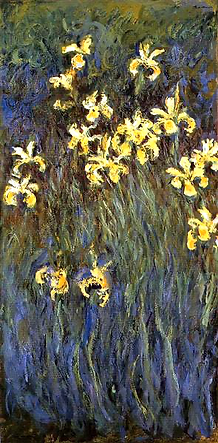
Irises bloom at the water’s edge — flowers that grow at crossings, symbols of wisdom earned through passage. The landscape itself is active: water flows, light breaks, plants emerge. Everything is in motion, yet nothing is chaotic. Balance is revealed as continual adjustment rather than stillness.
esoteric correspondences
“To put everything in balance is good, to put everything in harmony is better.”
Victor Hugo
Esoterically, Temperance is the clearest image of alchemy in action. The impossible flow of liquid between the cups represents the Hermetic process of solve et coagula — dissolving what is fixed and recombining it into a new form. The flow is continuous, deliberate, and precise. Nothing is spilled. Nothing is rushed.
Astrologically, Temperance corresponds to Sagittarius, the seeker and archer. This association is crucial. Sagittarius gives direction to balance. It reminds us that harmony is not static neutrality, but oriented toward meaning. Balance is not an end state; it is a method that serves a higher aim.
Alchemically, Temperance aligns with albedo, the whitening that follows the blackening of Death. The white robe signifies purification, but the red wings remind us that purification is born from fire, not avoidance. What emerges clean has already endured heat.
On the Tree of Life, Temperance resonates with the path between Yesod and Tiphareth — the movement from unconscious foundation to the balance of the Self. This path insists that unconscious material must be integrated, not denied or indulged. Where this process fails, imbalance governs from the shadows.

COSTUME & MOTIFS
“Moderation in temper is always a virtue; but moderation in principle is always a vice.”
Thomas Paine
The angel’s robe is white with gold at its edge — purity disciplined by wisdom. At her chest is the triangle within the square, a glyph of spirit working through matter, reminding us that transcendence is meaningless if not embodied.
Her wings are deep red, commanding and fierce. They are the fire that makes peace possible, the energy that tempers rather than destroys. These are not decorative but functional — signs that balance is maintained through force as well as grace.
The twin cups are unequal, one raised, one lowered. Balance here is not symmetry but flow. The arc between them is impossible under physical law, yet essential to symbolic truth. At her brow a golden halo glows without arrogance — enlightenment bound to humility. Even the irises at her feet serve as motif: threshold flowers, blooming at the meeting of earth and water, standing for wisdom that grows where opposites meet.
A favourite of mine in the Thoth Tarot, this card is renamed Art, as in the alchemical meaning of the word which makes its meaning explicit. Crowley and Harris depict a winged and androgynous figure mixing fire and water, crowned with a rainbow, standing within a cauldron where opposites are fused. Here the work is not moderation but creation — the alchemical opus, the art of reconciliation that births a third thing from the collision of two.
The card insists that Temperance is never bland balance — it is the Great Work, the art of transformation itself.


archetype & psychology
“Everything in moderation, including moderation.”
Oscar Wilde
Temperance is the archetype of integration. It is the space between stimulus and reaction, where choice enters and the psyche grows. In Jungian terms, it is the work of individuation: the conscious mind learning to integrate the unconscious, shadow, and anima/animus, rather than splitting them apart.
Temperance is the inner regulator — the one who pours from one cup to another until extremes are held in proportion. This does not mean passivity. It means endurance: the willingness to contain tension long enough for something new to be born.
In stories, Temperance is the healer, the artisan, the diplomat — but only when these roles are lived with truth. When false, she becomes appeasement or dilution.
Psychologically, she represents the disciplined ego that refuses collapse into chaos, but also refuses the rigidity of denial.
upright Meaning
“Harmony is pure love, for love is complete agreement.” — Lope de Vega
Upright, Temperance indicates integration, healing, and recovery. It appears when the work of balance is active — when opposites are beginning to find their right relation. It may signal physical recovery after illness, emotional reconciliation after conflict, or calm after upheaval.
In relationships, Temperance upright speaks of collaboration where differences strengthen the bond rather than fracture it.
In work, it signals long projects that succeed through patience and pacing. In inner life, it marks the slow emergence of wholeness, where the unconscious and conscious learn to cooperate.
This card also counsels patience. The angel does not rush; her work is precise. Upright Temperance tells us that healing cannot be forced, only tended — but if tended, it will endure.
reversed meaning
“The fault, dear Brutus, is not in our stars, but in ourselves.” — Shakespeare
Reversed, Temperance exposes imbalance, overreaction, or the false mask of peace. It can reveal the chaos of extremes: overindulgence, burnout, volatility, or the refusal to moderate.
It can also show the subtler danger of fake harmony — situations where conflict is smothered rather than resolved, leaving all parties weakened.
In a personal reading, reversed Temperance warns against pouring yourself out too much, or retreating so far into self-protection that no exchange is possible.
It can point to addictive swings between excess and denial, relationships lurching between intensity and withdrawal, or work patterns that collapse into exhaustion.
The reversal calls for recalibration. Slow down, reassess proportions, and remember that balance is not achieved once and for all — it must be remade daily.

shadow
“I am in that temper that if I were under water I would scarcely kick to come to the top.”
John Keats
True Temperance never dilutes — it integrates, even when integration requires fire. The shadow of Temperance is not chaos but distortion. It appears when balance becomes an act of denial, when harmony is faked through suppression, or when moderation is wielded as a weapon. Archetypally, this is the counterfeit mediator — the one who looks serene but whose calm is bought at the expense of truth.
One shadow form is over-indulgence masquerading as balance. The psyche tells itself its moderating when in reality it is swinging between extremes — excess followed by denial, indulgence followed by punishment. The cups become instruments of perpetual pouring and spilling, never integration.
Another is false spirituality — the appearance of virtue covering rot. In this distortion, individuals play the saviour, the good one, the endlessly patient. They become martyrs of harmony, outwardly calm but inwardly seething, blind to the forgotten, the neglected, the victim left outside their circle of care. Balance here becomes theatre, not truth.
The archetype is also warped into a circus act of juggling. Instead of true integration, life becomes constant trickery: beliefs swapped like costumes, strategies shifted to keep appearances intact. The hands are never still, the cups always in motion, but nothing of substance is ever transformed.
The dark mirror of Temperance is therefore the archetype emptied of depth: balance as performance, virtue as mask, peace as suppression. Cause and effect follow: repression breeds eruption, false virtue breeds resentment, juggling collapses into chaos. What should heal instead corrupts.
here and now
“Life is like riding a bicycle. To keep your balance, you must keep moving.”
Albert Einstein
In the modern world, the shadow of Temperance plays out in plain sight. The culture is awash with fake spirituality that disguises intolerance. Influencers preach “balance” while selling division. Religious and political movements cloak hatred in the language of harmony. The word peace is used as a shield for violence, moderation as cover for cruelty.
Temperance is endangered. Societies reward outrage and extremes, while nuance and proportion are mocked. Loudness is mistaken for strength, and moderation for weakness.
Individually, compassion curdles into burnout. People pour themselves out until nothing remains. Generosity becomes exhaustion, and the urge to repair the world curdles into demented rage, turned outward in myopia, falling hardest on those nearest rather than on the causes that cannot be controlled. The loudest drum, making the most noise, drowns out the voices of reason. All sound and fury, but without balance.
Politically and socially, appeasement often replaces real integration. Injustice is tolerated for the sake of stability, harm smoothed over in the name of order. The result is fracture: societies spinning between extremes with no one willing to bear the tension of reconciliation. Against this, the old phrase “the meek shall inherit the earth” stands as foil. Meekness in its true sense is not cowardice but discipline — power held in proportion, strength biding its time.
The meek are not without energy or means; they simply refuse to squander them in noise and spectacle. History shows their patience is not endless. When thresholds are crossed, the meek act fiercely and deliberately, not from rage but from necessity. Meekness is not inaction but timing — giving all other options their chance before unleashing strength. It is endurance that outlasts fury, and when action comes, it is measured, not hysterical.
Here and now, the angel of Temperance is radical. She demands that we resist noise and fury, endure tension, and refuse counterfeit harmony. Her way is slow, deliberate, costly — but without it, collapse follows. With it, there is still hope of wholeness.

conclusion
Temperance XIV is not softness but craft. It teaches that balance is born from fire, and peace is the product of discipline. To draw this card is to be called into the alchemy of opposites — the only path where transformation can last.