

the major arcana
Where the structure of the deck begins.
what the majors reveal
The twenty-two archetypes mark turning points in power, belief, and identity — each one a framework for understanding how a life takes shape and how a mind is tested.
The Majors are not decorative myths — they are diagnostic tools for examining how power, fear, and choice work in real time.
They are not fortune-telling symbols but structural ones: they show where patterns begin, where they break, and what stands behind choice.
Every Major Arcana page follows the same structure to keep the reading clear, grounded, and uncompromising:
Each section is designed to be direct, reasoned, and psychologically precise.
These pages are the structural backbone of the deck, and everything that follows in the Minor Arcana sits on the foundations set here.

how each page works
Archetype & Tradition — the inherited pattern the card belongs to, and the long line of its symbolic ancestry.
Esoteric Correspondences — astrological, elemental, or occult markers that inform the card’s logic.
Setting the Scene — the landscape, architecture, and visual structure that define how the card operates.
Costume & Motifs — vestments, colour, and emblematic detail that signify status, function, and character.
Archetype & Psychology — what the card exposes in thought, behaviour, and the internal argument of a life.
Upright & Reversed — how the card speaks in balance or in tension.
The Shadow — the cost of the archetype: distortions, failures, or truths people prefer not to name.
Here & Now — how the card mirrors the present world with accuracy rather than sentiment.
Click any card to open its full page.
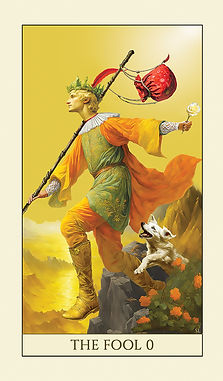


The Major Arcana as a sequence of archetypal pressure, not a ladder of improvement.
Home