the sun xix
the triumph of light
“Even the darkest night will end and the sun will rise.” Victor Hugo, Les Misérables

archetype and tradition
“When it was dark, you always carried the sun in your hand for me.”
Sean O'Casey
The Sun is the archetype of disclosure after distortion. In the sequence of the Major Arcana, it follows the Moon not as correction but as consequence. Where the Moon exposes the psyche’s capacity for projection, fantasy, and fear, the Sun reveals what remains once illusion can no longer be sustained. It is not subtle, and it is not negotiable. The Sun does not invite interpretation; it insists upon visibility.
Across myth, the Sun functions as the guarantor of order. Helios surveys all things; Apollo governs proportion, truth, and measure; Sol Invictus rises at the darkest point of the year to assert continuity against entropy. These figures are not merely solar deities but civilisational principles. They encode the understanding that without reliable illumination — moral, intellectual, and social — coherence collapses. Law dissolves into whim. Truth fragments into belief.
In tarot tradition, Pamela Colman Smith’s Sun card crystallised this logic visually: the child, the white horse, the wall, the sunflowers, the radiant disc. Together, these symbols articulate a grammar of openness, integration, and unguarded life. My Tribute Tarot does not dismantle this grammar because its function remains intact.
Culturally, the Sun has been coded as masculine — steady, public, authoritative — in contrast to the Moon’s supposed feminine mutability. This polarity is not cosmic truth but cultural projection. Yet the Sun’s archetype quietly undermines the hierarchy it appears to support. Constancy is not virtue in itself, and illumination does not guarantee wisdom. The Sun reveals not only what is hidden, but the limitations of light itself. It exposes the danger of equating visibility with value.
esoteric correspondences
“I will take the sun in my mouth and leap into the ripe air Alive
E.E. Cummings, Poems, 1923-1954
Astrologically, the Sun rules Leo: fixed fire, sovereignty, expression, and creative authority. This is not ego as vanity, but identity as presence — the capacity to stand visibly as oneself without disguise. Solar vitality radiates outward, seeking recognition not for validation but for coherence. When integrated, it nourishes; when distorted, it overwhelms. The Sun governs the tension between authentic expression and performative display.
On the Kabbalistic Tree of Life, the Sun corresponds to the path of Resh, meaning “head” or “face,” linking Hod (intellect, analysis) to Yesod (foundation, image). This is the channel through which thought becomes lived reality. The Sun here is not merely illumination but intelligibility — ideas embodied, principles enacted. It marks the passage where abstraction must accept consequence.
Alchemically, the Sun belongs to rubedo, the reddening — the culmination of the opus. This is not purification or refinement, but integration. What has been separated, tested, and endured is now recombined. The orange banner in my card signals this explicitly. It is not celebratory flourish but alchemical declaration: the work has been carried through. Energy is no longer latent; it is visible and active.
The Sun marks the point at which experience no longer fragments identity but consolidates it. Cycles do not end in exposure; they restart under clearer conditions. What survives illumination is what belongs to the self.


setting the scene
“I can see the sun, but even if I cannot see the sun, I know that it exists. And to know that the sun is there - that is living.” Fyodor Dostoevsky, The Brothers Karamazov
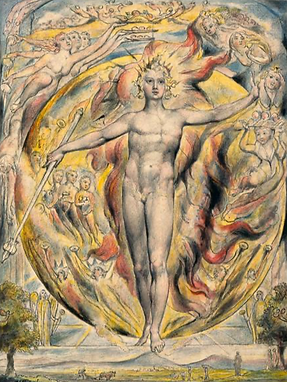
My Sun card is a landscape stripped of ambiguity. The sky is dominated by an immense solar face — not distant, not symbolic, but present. It does not peer or judge; it simply watches. Its gaze is steady, impartial, and unavoidable. This is daylight without refuge.
Below, a low wall defines the boundary of a cultivated garden. It is not defensive, but delimiting. It marks the distinction between chaos and care, between growth and neglect. Over it rise tall sunflowers, turning instinctively toward their source. They are not ornamental. They are evidence. Life orients itself toward what sustains it.
At the centre rides a child astride a white horse. He is bare, but not nude — clothed in a red sash that binds him to the banner he carries. Instinct here is neither suppressed nor ungoverned. It moves willingly into visibility. The horse is calm, untroubled, a creature of appetite reconciled with daylight.
The scene offers no theatrical mystery. Stone is stone. Flower is flower.
After the Moon’s dream-logic, this is blunt realism. Nothing hides. Nothing performs depth. Meaning emerges through exposure, not suggestion.
COSTUME & MOTIFS
“People are like stained-glass windows. They sparkle and shine when the sun is out, but when the darkness sets in, their true beauty is revealed only if there is a light from within.”
Elisabeth Kübler-Ross
Every motif in the card serves its archetype with precision. The sash distinguishes the child from naïve nudity. Joy here is not ignorance, but vitality informed by experience. This is a body that has endured and still moves forward.
The white horse symbolises instinct unafraid of clarity. Appetite is no longer an adversary to consciousness, nor a force to be indulged blindly. It becomes an ally once acknowledged. Movement under the Sun is unashamed.
The orange banner carries alchemical weight. It signifies completion, transformation, and visible power. The purple feather rising from the sunflower crown introduces intellect and sovereignty into delight — thought elevated, not excluded.
The wall matters. It reminds us that clarity requires boundaries. Gardens flourish because limits exist. And above all, the Sun’s face insists: this is source, not reflection. Unlike the Moon, which borrows light, the Sun radiates by its own authority.

archetype & psychology
“The sun is new each day.” Heraclitus
Psychologically, the Sun represents integration after fragmentation. It follows the Moon’s reign of projection and fear and announces the stage where the psyche can tolerate itself without distortion. This is not ego triumph, but reconciliation — instinct with intellect, body with meaning, inner with outer.
The child is not the Fool repeated. He is innocence regained after ordeal. Shame no longer governs movement. The horse carries instinct forward without resistance, demonstrating that desire need not be vilified when consciously held.
The Sun does not license excess. It does not promise perpetual happiness. It offers coherence. Vitality becomes sustainable only when recognised, not performed. To live under the Sun is to accept responsibility for what is revealed.
Psychologically, this is difficult terrain. Daylight strips excuses. Many prefer ambiguity because clarity demands action. The Sun forces the question not of happiness, but of honesty: can one live without the masks that once protected survival?
UPRIGHT
“Keep your face to the sun and you will never see the shadows.” Helen Keller
Upright, the Sun heralds clarity, vitality, and the return of trust in life. It is the season when confusion gives way to certainty, when the simplest explanation proves correct, when honesty pays its due. Health improves, energy renews, relationships unclench. What was doubted is confirmed, and what was obscure is revealed in plain terms.
The Sun upright also signals reconciliation with the self. After the Moon’s projections and fears, the Sun invites a simpler stance: to be at ease in one’s own skin, to be seen without disguise, to allow instinct and intellect to move together. It does not erase hardship, but it reframes it, showing that difficulties can be endured without the constant shadow of defeatism or illusion.
In work or creative life, it represents accomplishment that feels grounded rather than inflated — success because the foundations are sound. In relationships, it suggests transparency, warmth, and the joy of being with others without pretence.
The Sun’s upright presence does not promise permanence, but it brings enough light to proceed without self-deception. It is realism warmed, clarity sustained, joy unembarrassed.

REVERSED
“If you cry because the sun has gone out of your life, your tears will prevent you from seeing the stars.”
Rabindranath Tagore
Reversed, the Sun signals difficulty with exposure. Success may arrive but feel hollow; joy may be present but distrusted. The light itself can turn harsh — too much visibility, too much pressure to shine, too much demand for positivity. What should feel nourishing instead feels performative or draining.
This reversal often speaks of burnout. The body is tired, the spirit exhausted, but the cultural demand is to keep smiling, keep producing, keep glowing. Under such conditions, the Sun no longer warms but scorches. The card can also point to a distrust of good fortune: waiting for the drop, unable to relax even when things go well.
At times, reversed Sun describes the unease of being seen too soon. Truth is revealed before readiness; privacy is breached; intimacy feels like intrusion. In social life, it may show the hollowness of toxic positivity, where smiles conceal discontent and joy is staged rather than lived.
Yet even in reversal, the Sun is not a total eclipse. Its message is that clarity is present but not trusted, that warmth exists but is resisted.
here and now
“Today is the sort of day where the sun only comes up to humiliate you.”
Chuck Palahniuk, Fight Club
In the present moment, the Sun’s archetype is distorted through constant exposure. Visibility has become currency. Worth is measured by output, engagement, productivity, and perpetual availability. The modern psyche is rarely allowed to retreat; everything is tracked, shared, and evaluated. The demand is not simply to live, but to be seen living well — brightly, convincingly, without interruption.
This produces a culture saturated with light but starved of nourishment. Performance masquerades as presence. Positivity becomes an aesthetic rather than a state of being. Individuals learn to curate happiness, to display resilience, to narrate recovery before it has taken root. The Sun’s energy, stripped of its grounding function, becomes exhausting rather than sustaining.
At the personal level, this manifests as burnout and distrust of ease. Many struggle to relax even when circumstances improve, waiting for collapse to follow success. Joy feels provisional, fragile, undeserved. The Sun, once a source of reassurance, becomes a test one must constantly pass: am I radiant enough yet? Under such pressure, clarity is feared because it removes excuses and demands honest inhabitation of one’s life.
Yet the Sun’s message here is corrective, not condemning. It calls for a return to embodied clarity — light that reveals without humiliating, truth that steadies rather than exposes. In the here and now, The Sun asks us to distinguish glow from glare, presence from performance, warmth from surveillance. Its invitation is simple but exacting: to live visibly, yes — but truthfully, humanly, and without the armour of display.


shadow
“We are like roses that have never bothered to bloom when we should have bloomed
and it is as if the sun has become disgusted with waiting”
Charles Bukowski
The Sun’s shadow is not darkness, but excess light. Archetypally, it manifests as the tyranny of illumination: the belief that everything must be visible, resolved, cheerful, and declared. Under this glare, ambiguity becomes suspect, rest is framed as weakness, and complexity is treated as failure. Where The Moon confuses by obscuring, The Sun can wound by overexposing. The psyche is not given time to recover; it is demanded to shine.
Psychologically, this distortion appears as compulsory positivity. Joy becomes obligation, optimism a moral duty. Pain is rushed, grief is edited, and anger is pathologised. In this shadow state, the individual is not allowed interior weather. One must “be fine,” “move on,” “see the bright side.” The Sun, when distorted, becomes an internalised overseer that punishes depth for not being immediately legible.
There is also the opposite shadow: complacency beneath constant daylight. Because the Sun reliably returns, it is taken for granted. Growth is assumed, vitality expected, truth presumed permanent. This breeds arrogance and neglect. When light is constant, vigilance fades. Meaning stagnates. The soul, no longer tending its own fire, becomes dependent on external warmth and loses resilience.
At its deepest level, the Sun’s shadow is the collapse of being seen into being exposed. Visibility replaces intimacy. The self is flattened into surfaces, roles, and performances. What cannot be displayed is denied existence. In such conditions, authenticity is dangerous and interiority erodes. The Sun’s dark glass reminds us that illumination without shelter scorches, and that truth, if it is to nourish, must be allowed to warm rather than burn.
conclusion
The Sun XIX is clarity after confusion, nourishment after drought, exposure without disguise.
Its danger is tyranny and complacency; its promise is relief and renewal.