

the suit of pentacles
THE MEASURE OF WORTH
“Don't judge each day by the harvest you reap but by the seeds that you plant.”
― Robert Louis Stevenson
ELEMENT & ESSENCE
“Wealth consists not in having great possessions, but in having few wants.”
— Epictetus
The Pentacles belong to the element of Earth. They concern the tangible world: the body, labour, time, craft, and consequence. Where the Cups speak of feeling and the Swords of thought, the Pentacles describe what remains when intention is tested by effort and duration — what endures once ideas must function in the real world.
Earth is the realm of weight and consequence. It is the stone laid, the field cultivated, the coin earned, the house built slowly enough to stand. Its lessons are rarely dramatic. They unfold through repetition, patience, and the long discipline of attention. In this suit the measure of value is not brilliance but endurance — what holds together across time.
Yet the Pentacles are never merely material. Matter itself carries meaning. Every act of making reveals intention; every exchange reflects value beyond price. The suit reminds us that prosperity is not possession but participation — the willingness to sustain, maintain, and take responsibility for what one brings into the world.

ARCHETYPES & THEMES
“There are no passengers on spaceship Earth. We are all crew.”
— Marshall McLuhan
The figures of the Pentacles are people shaped by the demands of reality: steady, patient, observant of consequence. Their strength lies not in speed or spectacle but in the quiet authority that comes from understanding how things grow, decay, and endure.
Where other suits may blaze or clash, Earth proceeds deliberately. Skill deepens through repetition. Value accumulates through care. The work is often humble, sometimes unseen, yet its effects shape the foundations of life itself.
In its strongest expression brings stability, resourcefulness, and a sense of belonging to the physical world. In its weaker forms it may harden into stagnation, possessiveness, or fear of change.
The Pentacles therefore examine not wealth alone, but the deeper question beneath it: how one stands in relation to the material world and the responsibilities it brings.

DECANS OF EARTH
“The earth laughs in flowers.”
― Ralph Waldo Emerson
According to some, each Pentacles card belongs to a precise portion of the zodiac. A useful guide if you are interested in using a card as a querent significator based on birth date.
II Pentacles 0°–10° Capricorn (22–31 Dec)
III Pentacles 10°–20° Capricorn (1–10 Jan)
IV Pentacles 20°–30° Capricorn (11–19 Jan)
V Pentacles 0°–10° Taurus (20–30 Apr)
VI Pentacles 10°–20° Taurus (1–10 May)
VII Pentacles 20°–30° Taurus (11–20 May)
VIII Pentacles 0°–10° Virgo (23 Aug–1 Sept)
IX Pentacles 10°–20° Virgo (2–11 Sept)
X Pentacles 20°–30° Virgo (12–22 Sept)
Whether you use these dates or not - these decans remind us that what is sustained endures; what is neglected does not.


ace of pentacles
the element of earth
“Earth provides enough to satisfy every man's needs, but not every man's greed.”
― Mahatma Gandhi

myth and meaning
“All that we are arises with our thoughts.
With our thoughts, we make the world.” — Buddha
The Ace of Pentacles represents the earliest stage of manifestation — the crossing point where an idea becomes matter. In my Tribute Tarot, the golden pentacle is not a coin to be hoarded but a seal of potential held upright in a human hand. The gesture implies responsibility before ownership: what is given must be built upon, not possessed.
Historically, the Ace of Pentacles belongs to the lineage of creation myths in which divine potential descends into form — not as reward, but as burden. From the clay of Genesis to the craftsman of Hephaestus, the human act of making has always carried moral weight. To create is to bind oneself to consequence.
In psychological terms, the card speaks to individuation through engagement with the real. The psyche steps out of abstraction and accepts the limitations of substance — gravity, cost, decay. This is the confrontation between idea and endurance, where integrity becomes the measure of truth.
Although the Ace stands outside the numbered decans, it contains the seed from which the entire suit unfolds. The Pentacles progress through the Earth signs — Capricorn, Taurus, and Virgo.

upright
“Fortune favours the prepared mind.”
— Louis Pasteur
Upright, the Ace of Pentacles appears at the moment when potential becomes materially viable. In a reading, it signals the emergence of tangible order from uncertainty — a seed that can be cultivated, a structure that can be trusted. This is not abstract promise but the first reliable foothold: the point where intention meets resource and begins to cohere into value.
In practical terms, the card often marks the founding of something real: a job, a home, a skill, a body of work. It asks what can be built slowly and sustained over time. When this Ace appears, stability is achieved not through force or speed but through restraint and proportion — the moral virtue of measured creation applied to circumstance.
Psychologically, the Ace of Pentacles describes the ego functioning at its healthiest in the material realm. It appears when fantasy gives way to effort, and insight seeks form rather than admiration. The reading points toward patience, discipline, and care — the willingness to tend what has begun rather than abandon it for novelty.
Historically and symbolically, this card echoes the pattern behind every lasting civilisation: prosperity follows integrity, not invention alone. When drawn upright, the Ace affirms that order is the true origin of wealth. What is beginning now can endure — provided it is grounded in precision and stewardship rather than appetite.

reversed
“He who builds on the people builds on mud.”
— Machiavelli
Reversed, the Ace of Pentacles appears when foundations are compromised. In a reading, it warns that what is being pursued lacks proportion, care, or moral clarity. The promise of form collapses into haste; cultivation is replaced by consumption. Something that should have been grown is being spent too early.
This reversal often points to familiar failures: the project rushed, the craft diluted, the system expanded beyond its capacity. It signals the belief that substance can exist without discipline. When this card appears reversed, the reading asks where quality has been traded for speed, or integrity for convenience.
On an inner level, the reversal marks disconnection from the material psyche. Energy is present but uncontained; ambition exists without aim. The individual may work harder than ever and yet build nothing lasting, because the ground beneath the effort has not been secured. Action multiplies while meaning fragments.
Reversal here is not punishment but exposure. The Ace reveals weak foundations and the danger of mistaking appetite for achievement. In a reading, it calls for realism rather than optimism — a return to what is sound, modest, and repairable. Correction begins when illusion is abandoned and proportion restored.

scene & symbols
“Opportunities multiply as they are seized.” — Sun Tzu
The composition is spare and deliberate. A single human hand emerges from cloud, holding the pentacle not aloft in triumph but level, as one might offer a tool or measure a weight. This is not divine excess but provision: the world placing something tangible into human reach. The cloud does not suggest mystery so much as circumstance — the unseen conditions that make material opportunity possible, whether inheritance, timing, climate, or collective effort.
The centre mists, subtly echoing a contained world, implying gravity, limits, and consequence. The five-pointed star inscribed within the circle speaks to balance rather than domination: the elements held in proportion, intention constrained by form. Gold here is not luxury but vitality — stored labour, condensed time, value made visible. Nothing here is raw or wild. The card suggests repetition, pruning, and patience — beauty earned through care. This is intelligence applied over time, not inspiration alone. What is offered must be worked, maintained, and protected if it is to endure.
The open landscape beyond — fields stretching toward distant mountains — establishes scale. There are no walls, no gates, no witnesses, only space and responsibility. This is opportunity before ownership, before exploitation. The card does not promise abundance; it presents capacity. Whether the land becomes sustenance or ruin depends entirely on how the gift is handled.
The Ace of Pentacles refuses sentimentality. It shows prosperity as condition, not guarantee — a world offered, not secured. The sphere rests lightly in the hand, but its weight is real. What is given can be built upon, squandered, or corrupted. Earth remembers all of it.
shadow
“The chains of habit are too weak to be felt until they are too strong to be broken.”
— Samuel Johnson
The shadow of the Ace of Pentacles is material fixation — the moment when stability curdles into hoarding, and stewardship collapses into ownership. What begins as the promise of grounded creation becomes the fear of loss. The open hand closes. The gift is no longer received with care but guarded with anxiety. Value is confused with possession, and the world is reduced to what can be held, measured, or defended.
At a collective level, this shadow repeats relentlessly. Civilisations at their peak mistake accumulation for continuity — Rome’s gold, Ottoman's gold, Crusader's gold, financial modernity — each convinced that growth itself guarantees survival.
Psychologically, the same error plays out in miniature: identity fastened to income, status, property, output. The self becomes anchored to externals, brittle beneath the weight of what it owns. Jung described this as regression into the material persona — a psyche no longer shaped by meaning, but by inventory.
The moral danger is not wealth itself, but disproportion. When means eclipse ends, work loses dignity and becomes compulsion. Creation turns extractive. The maker forgets why the work began and serves the system rather than the craft. The Ace’s shadow asks a difficult question: is effort still building life, or merely sustaining habit? Is labour directed toward continuity, or simply maintaining appearances?
This shadow also manifests as inertia disguised as security. Fear of disruption replaces discernment; comfort masquerades as virtue. The soil is never tested because it might fail. Opportunities are buried under caution, and potential rots beneath prudence. What should have been cultivated becomes stagnant — safe, but lifeless.
To hold lightly is not to reject the world, but to remain capable of shaping it. True wealth is not what is accumulated, but what remains generative. When proportion is restored, the Ace returns to its proper function: foundation rather than fixation.


here & now
“The highest reward for a man’s toil is not what he gets for it, but what he becomes by it.” — John Ruskin
In the present moment, the Ace of Pentacles exposes a culture trapped in contradiction: unprecedented productivity alongside chronic insecurity. We generate more than ever, yet live in fear of insufficiency. We speak of scarcity amid excess, stability amid constant churn. The card mirrors this imbalance — abundance without assurance, effort without rest.
Economically, it reflects systems that consume faster than they regenerate: labour severed from craft, value abstracted from work, profit detached from consequence. Psychologically, the same pattern appears as exhaustion — attention fragmented, effort compulsive, achievement pursued without satisfaction. Production continues, yet meaning grows thin. The soil is worked, yet nothing takes root.
The Ace appearing does not promise prosperity — it questions it. It asks whether what is being built can endure. Whether foundations are sound, or merely expedient. Whether growth serves life, or life has been subordinated to growth. It challenges the belief that speed equals success, and that output alone confers worth.
Culturally, this card reasserts the dignity of the maker, the grower, the builder — those whose intelligence is measured in precision, patience, and care. It honours continuity over spectacle. The Ace is not romantic about labour, but honest: what survives is what is tended. What lasts is what is proportionate.
Here & now, it reminds us that stability is not given; it is made, repaired, and sustained daily. Seen clearly, the Ace is not a promise of gain, but an invitation to build something that does not collapse under its own weight.
conclusion
The Ace of Pentacles is civilisation’s first principle — the acknowledgement that matter and morality are inseparable.
It frames prosperity not as accumulation but as the steady alignment of intention, skill, and consequence.
ii pentacles
the element of earth
“To achieve greatness, two things are needed: a plan, and not quite enough time.”
— Leonard Bernstein

myth and meaning
“Life is like riding a bicycle.
To keep your balance you must keep moving.” — Albert Einstein
The Two of Pentacles represents life’s essential paradox: motion as the only route to stability. Where the Ace established the material foundation, this card depicts the first tension as the mind and body adjusts to sustain equilibrium while everything around them shifts. The image suggests not rest but rhythm: stability achieved through continual movement.
The card belongs to the first true dialectic of the suit: effort and ease, growth and restraint, faith and fatigue. In mythic terms, she is both Persephone and Penelope — one navigating dual realms, the other weaving and unweaving time.
The Two therefore introduces rhythm into the suit. The Ace established substance; the Two teaches how to live within its demands. Life does not stabilise by standing still but by continual adjustment — a choreography between pressure and response.
Decan Notes: Second decan 0°–10° Capricorn. Dates: 22–31 December with Jupiter in Capricorn — expansion disciplined by structure; growth that survives only through measured balance.

UPRIGHT
“To put everything in balance is good,
to put everything in harmony is better.”
― Victor Hugo
Upright, the Two of Pentacles describes equilibrium maintained through intelligence, not accident. It appears when competing forces demand proportion — when the practical and the personal, the internal and external, must be negotiated simultaneously.
This is the card of conscious adaptability. It depicts a person capable of movement without dispersion — of managing flux without losing integrity. In concrete terms, it concerns the organisation of time, resources, or commitments, yet beneath that lies an ethical truth: responsibility is rhythmic. To endure is to adjust, not to resist.
Psychologically, it parallels the functioning ego: the mediator between instinct and ideal, perpetually recalibrating.
When upright, the Two signifies coherence. It is the individual who learns to operate within complexity without being consumed by it. The message is not serenity but skill — the discipline of remaining articulate in a world that moves faster than comprehension.

REVERSED
“Everything worth fighting for unbalances your life.”
― Alain de Botton
Reversed, the Two of Pentacles reveals collapse of proportion. The dance becomes disorder; rhythm degenerates into noise. The figure loses tempo and begins to mistake haste for progress. This is imbalance born not of weakness but of excess — too many commitments, too little reflection.
In practical life, it manifests as overextension: financial strain, administrative confusion, the blurring of priorities. Psychologically, it is dispersion: the fragmentation of the self under competing imperatives.
At its mildest, reversal points to distraction — the intellect overstimulated, chasing every possibility without grounding any. At its worst, it indicates ethical fatigue: the erosion of values under relentless activity. Recovery begins not through withdrawal but through discernment — restoring the hierarchy of what matters.
The reversed card is not catastrophe; it is a mirror showing where rhythm has given way to reaction.

scene & symbols
“Order is not pressure which is imposed on society from without,
but an equilibrium which is set up from within.” — José Ortega y Gasset
The scene is coastal and unstable. The figure stands at the edge of land and sea, where footing is never guaranteed. Waves rise behind her, not threatening disaster but refusing stillness. This is not a place of rest — it is a threshold where attention must remain alive. The shoreline marks the meeting point between effort and uncertainty, suggesting a life managed in motion rather than resolved in comfort.
The figure’s posture is dynamic, almost dance-like, yet controlled. She does not brace herself against the wind; she works with it. Her lifted arms hold two pentacles in equal tension, each weighted, each demanding care. They are not tossed or spun but actively sustained. The infinity-shaped ribbon looping above her binds them into a single system: resources, time, obligations, and values interlinked. Nothing here is isolated; every adjustment affects the whole.
Her clothing reinforces this balance of play and discipline. The green dress grounds her in earth and labour, while the red accents speak to vitality, urgency, and risk. The elaborate headpiece, dramatic yet precarious, mirrors the mental load of coordination — the unseen strain of keeping everything in motion without collapse. This is competence under pressure, not ease.
The ships in the background move independently of her will, reminding us that external demands do not pause for personal readiness. Trade, work, and responsibility continue whether she is prepared or not. Balance here is not serenity but continual correction — abundance not as possession, but as something temporarily held and sustained through attention.
shadow
“Beware the barrenness of a busy life.” — Socrates
In shadow, the Two of Pentacles reveals not balance but compulsion — movement without measure. What began as adaptability curdles into restlessness; what once preserved life becomes a performance that cannot stop. Busyness is mistaken for necessity, momentum for meaning. The hands keep moving long after the need has passed.
The dancer no longer chooses the rhythm; she obeys it. Her grace is intact, but her freedom has thinned. This is the anxiety of visibility — the fear that stillness equals disappearance. To pause feels dangerous; to stop feels like failure. Motion becomes a shield against the terror of being unneeded.
Psychologically, this shadow reflects an overdeveloped persona sustained by constant engagement. The self is maintained through activity, responsiveness, productivity — never allowed to rest long enough to ask whether the dance still serves life. Jung warned that such compensation breeds psychic inflation followed by collapse: energy expended to avoid depth eventually exhausts the psyche altogether.
The same pattern appears collectively. Activity becomes a virtue in itself; reflection is treated as weakness. Survival grows mechanical — efficient, exhausted, hollowed from within. When balance is replaced by momentum, the dancer serves the dance rather than the other way around. Survival without reflection becomes mechanical life — efficient, exhausted, and hollowed out from within.
The danger here is not excess alone but amnesia: forgetting why the movement began. When balance is replaced by momentum, the dancer serves the dance rather than the other way round. What once sustained life now consumes it.
The remedy is not withdrawal but recollection — remembering the original rhythm. Balance is not constant motion but measured engagement. Mastery lies not in never stopping, but in knowing when to pause between steps.


here & now
“Until everything topples, we have no idea what we actually have, how precariously and perfectly it all hangs together.” ― Blake Crouch, Dark Matter
In contemporary life, the Two of Pentacles speaks to a culture that praises flexibility while quietly dissolving stability. Motion becomes the default condition — attention divided, commitments provisional, equilibrium maintained only through constant adjustment.
Yet the card does not mock adaptability; it interrogates its price. To navigate uncertainty with intelligence can be an art — but when flexibility becomes permanent, coherence erodes. The demand is no longer work, but availability; not skill, but responsiveness. Time fractures into fragments too small to rest inside.
Culturally, the card exposes the illusion of productivity that defines the digital age. We move constantly yet advance little; we communicate endlessly yet rarely connect. The infinity ribbon — once a symbol of grace — tightens into a loop of distraction and demand. Movement replaces progress; noise replaces direction.
Philosophically, the Two asks whether freedom can survive efficiency. It presses for a return to proportion — a revaluation of time as moral currency. IWhen attention itself becomes a commodity, the ability to focus becomes an act of proportion.
In my image, the dancer’s calm smile is not naïveté but knowledge. She understands that balance is not the absence of motion, but command of it. The sea behind her reminds us that rhythms exist beyond human urgency. To dance with the world without being consumed by it — that is the contemporary discipline of Earth.
The figure in red shoes lingers at the edge of the scene: the warning shadow of excess. She danced too long, mistook applause for meaning, forgot the moment to stop. Success and ruin often share the same tempo. To hold the world lightly while engaging it fully — this is the virtue the Two of Pentacles now asks us to relearn.
conclusion
Balance in the Two of Pentacles is not stillness but rhythm — the art of holding competing demands without collapse. What has entered the world must now be managed.
iii pentacles
the architecture of mastery
“What you build will outlast you, if it is built well.” — Marcus Aurelius

myth and meaning
““Quality is never an accident; it is always the result of intelligent effort.” John Ruskin
The Three of Pentacles marks the first true consolidation of effort within the suit. It is the beginning of real construction, where labour moves beyond effort and begins to take form through discipline, method, and structure.
Civilisations are not sustained by inspiration alone but by craft — the temple raised stone by stone, the cathedral shaped through generations of labour, the workshop where knowledge passes from hand to hand. The Three therefore speaks not only of skill but of transmission: what one learns must become something that others can recognise, use, and continue.
In my image the craftsman, merchant, and monk embody this principle as a living triad — labour, wealth, and wisdom held in necessary balance. Skill requires support, patronage requires conscience, and authority requires humility. None can stand alone. The card’s true subject is therefore not simple cooperation but the moral architecture required for anything enduring to be built.
Decan notes: 10°–20° Capricorn Dates: 1–10 January
Mars in Capricorn — disciplined effort directed toward lasting achievement.


scene & symbols
“Architecture is frozen music.” — Johann Wolfgang von Goethe
The scene unfolds inside the rising structure of a cathedral, its stone vaults arching upward into unfinished height. Light falls through the open space, catching dust in the air and illuminating the working floor where the exchange takes place. This is not a finished sanctuary but a place of labour — a building still becoming what it intends to be. The architecture itself sets the tone: order emerging slowly from effort, form raised through patience rather than spectacle.
At the centre stands the craftsman, turning from his work to acknowledge the two figures before him. His clothing echoes the colours of the surrounding stone and surfaces, a man shaped by the labour he performs. In contrast the merchant arrives in richer garments, deep reds and golds catching the light. In his hands he carries a chest of coins, its gleam both promise and temptation — wealth offered as patronage, yet also a reminder of the power money holds over what is made.
The monk stands between them with quiet composure, his expression calm and observant. If the merchant embodies material support and the craftsman practical skill, the monk represents judgement — the moral witness to the exchange.
The three pentacles fixed to the easel form a simple but deliberate geometry. They are not imagined ornaments but solid emblems of value, affixed to the plan like seals of authority. Together they create a triangle — the structural balance of labour, wealth, and wisdom.
UPRIGHT
“We shape our buildings;
thereafter they shape us.” — Winston Churchill
Upright, the Three of Pentacles celebrates the synthesis of effort, knowledge, and purpose. It represents not beginning but refinement — the mastery that follows long apprenticeship.
In work and vocation, it indicates skill operating at full integrity. Projects progress through careful planning, communication, and shared respect between those involved. It marks collaboration that produces excellence — when artisans, patrons, and thinkers align under a common moral aim.
In relationships, the Three of Pentacles suggests partnership founded on trust in one another’s abilities. Each person contributes a necessary strength; there is admiration rather than competition. This is shared craftsmanship of a different kind — the building of a life together through patience, attention, and grace.
In psychological terms, the card reflects integration through cooperation. The psyche recognises its internal divisions and learns to harmonise intellect, emotion, and instinct into coherent effort. It symbolises the mature ego — one no longer striving for independence but for contribution.
On a personal level, the card honours work done quietly, beyond applause. The individual finds meaning not in recognition but in execution — in the dignity of doing something well for its own sake.

REVERSED
“Without labour nothing prospers.”
— Sophocles
Reversed, the Three of Pentacles warns of disorder in what should be cooperative. Effort is dispersed rather than unified; purpose becomes diluted by ego or haste. The structure still rises, but its foundation weakens under imbalance.
In work, this reversal indicates friction between collaborators — breakdowns in communication, lack of respect for skill, or authority misused. Projects may falter through micromanagement or neglect, with craftsmanship sacrificed for speed.
In relationships, the card may appear when mutual purpose fades. One partner shoulders all effort while the other withdraws, creating silent inequality. The rhythm of cooperation fails; what should be partnership reverts to transaction.
In psychological terms, reversal points to inner division — the individual torn between standards and impulses, unable to maintain the alignment between principle and action. This is fatigue disguised as productivity, the exhaustion that comes from working without inspiration.
On the personal plane, it urges humility and patience: to slow down, rebuild the trust that supports real collaboration, and remember that all lasting structures require shared integrity.
shadow
“Pride goes before destruction, and a haughty spirit before a fall.” — Proverbs 16:18
In shadow, the Three of Pentacles reveals the corruption of structure. What should sustain mastery begins instead to control it. Hierarchy hardens; patronage turns possessive; institutions built to preserve skill begin to suffocate it. The card then becomes not a temple of making, but a monument to obedience — a place where forms remain but spirit has gone out of them. Work continues, yet no longer in service of truth or excellence; it serves power, vanity, or fear.
This is the ancient danger wherever craft meets authority. The mason becomes servant to prestige, the artist to propaganda, the teacher to dogma. What begins as disciplined cooperation decays into rank. In mythic terms, this is the fall from sacred building into Babel: not the raising of something worthy, but the inflation of structure beyond wisdom. The same hand that once carved with devotion begins to labour under command alone. The worker is no longer a participant in meaning, but an instrument of somebody else’s ambition.
Psychologically, the shadow appears wherever mastery loses humility. The experienced figure forgets the apprentice within and becomes rigid, possessive, or contemptuous. Knowledge becomes status. Skill, once earned through patience, is guarded as identity and turned against renewal. Equally, the opposite failure may occur: the one who ought to support or commission the work begins to dominate it, mistaking ownership for understanding. In both cases, relation collapses. Dialogue ceases. The living triangle of maker, patron, and witness becomes distorted, and the work itself begins to die.
Historically, this shadow repeats wherever institutions value permanence more than truth. Guilds become gatekeeping, religion becomes spectacle, scholarship becomes jargon, architecture becomes display. The outward form may remain impressive, yet inwardly the principle has been betrayed. One still sees the cathedral, but no longer the devotion that raised it. One still hears the language of excellence, but merit has been replaced by allegiance, vanity, or ritualised approval. The stone stands; the soul has left the building.
The deeper warning of this card is therefore not simply oppression, but deadening through system. Structure is necessary, but without conscience it becomes mechanism. Patronage is necessary, but without respect it becomes control. Collaboration is necessary, but without truth it becomes theatre. The Shadow of the Three of Pentacles asks whether the thing being built still serves life — or whether life has been bent to serve the structure.
Yet even here the card does not end in despair. Its remedy lies in restoration of right relation: humility restored to mastery, conscience restored to commerce, meaning restored to labour. The true foundation of any enduring work is not authority alone, but dialogue, proportion, and the willingness to submit one’s skill to something more serious than personal power.


here & now
“The dignity of labour depends not on what you do, but how you do it.” — Thomas Carlyle
In the present world, the Three of Pentacles speaks to a crisis of standards. We live amid constant production, endless display, and an abundance of declared expertise, yet genuine mastery is often harder to recognise than ever. The card asks a plain but uncomfortable question: who is actually building what lasts? Beneath the noise of self-promotion, branding, and institutional rhetoric, it returns attention to the older measures — skill, discipline, reliability, proportion, and the long proof of work.
Contemporary culture often celebrates visibility before competence. Recognition may arrive faster than apprenticeship; position may be granted before depth has been earned. The result is not merely mediocrity, but confusion about value itself. The Three of Pentacles cuts through that confusion. It insists that the worth of a thing lies in how it is made, how honestly it is supported, and whether those involved are in right relation to one another. This applies as much to art, education, and public life as to any manual craft.
The card is equally relevant wherever funding, institutional approval, or commercial pressure shape what may be built. Patronage is not the enemy; indeed, the card recognises its necessity. But patronage without discernment breeds corruption just as surely as talent without discipline breeds vanity. The question is whether support enables excellence or merely rewards compliance. In this sense, the Three of Pentacles is not naïve about systems. It understands that buildings require money, labour, and sanction. Its challenge is to keep those forces in balance, so that value is not sacrificed to fashion, expedience, or ideological display.
In my image, the monk, merchant, and craftsman still stand as a living argument for that balance. Wisdom without material support cannot realise itself; money without principle degrades what it touches; labour without recognition becomes servitude. The card therefore offers a model of social order that is neither sentimental nor utopian. It is practical, exacting, and rooted in reality: each figure must know his place, but each must also honour the others. Only then can the work become more than transaction.
Here and now, the Three of Pentacles restores seriousness to the idea of making. It rejects both the cult of effortless genius and the cynicism that treats all institutions as equally empty. Some things are still worth building well. Some structures can still hold integrity. Some collaborations can still produce beauty, truth, and durability. The card asks us to recognise that civilisation does not survive through opinion, image, or appetite, but through the patient alliance of skilled hands, clear judgement, and shared purpose.
conclusion
The Three of Pentacles reaffirms that civilisation is built through shared skill and cooperation. In my Tribute Tarot, the craftsman, merchant, and monk embody the enduring triad of work, wisdom, and wealth — each essential, each accountable.
iv pentacles
the fortress of possession
'When someone is counting gold for you, don't look at your hands, or the gold. Look at the giver.”
― Rumi,

myth and meaning
“He who is not contented with what he has, would not be contented with what he would like to have.” — Socrates
The Four of Pentacles stands as both warning and wisdom. It honours the human need for structure but warns of its petrification. Its lesson is that nothing truly possessed can be lost, and nothing withheld can be kept.
Four of Pentacles marks the transition from creation to containment — from the industrious collaboration of the Three to the solitary preservation of the Four. It captures the psychological moment when the material world, once a field of growth, hardens into possession. The figure here is both master and prisoner of his achievements: proud of what he has secured, yet subtly ruled by fear that loss will undo him.
This card reflects a universal theme: how the instinct for protection can evolve into the pathology of control. In mythic terms, it belongs to the lineage of figures who mistake permanence for power — the hoarder, the fortress-builder, the king who clings to his crown until it burns his brow. Its teaching is moral rather than material: possession is not mastery but stewardship.
Decan Notes: The card belongs to Mars in Capricorn (Second Decan, 10–19 January): the disciplined use of power, ambition contained by structure, and achievement grounded in ethics.

UPRIGHT
“Anyone who lives within their means suffers from a lack of imagination.”
― Oscar Wilde
In work and vocation, the Four of Pentacles signifies consolidation. It rewards planning, diligence, and sustained effort. Yet the card warns that mastery can curdle into fear: the refusal to risk growth for the sake of safety. Wealth without motion stagnates; skill without trust loses grace.
In relationships, the card suggests loyalty and devotion expressed through protection. But it can also point to possessiveness — affection constrained by rules. Love is guarded rather than given.
Psychologically, it represents dignity, restraint, and self-control, yet it cautions that control must serve purpose, not anxiety. It honours integrity, the art of maintaining one’s centre in a world of flux, while reminding us that generosity sustains life’s flow.
On the personal level, the upright Four embodies strength through order and responsibility through awareness. It celebrates what is earned — and asks for the grace to share it.

REVERSED
“Money can't buy happiness, but it can make you awfully comfortable while you're being miserable.”
― Clare Boothe Luce
In work, the reversed Four reveals the danger of hoarding success — control that smothers innovation. It speaks of leaders or organisations paralysed by their own systems, more concerned with maintenance than meaning. The cure lies in reanimation: to let what is secure circulate again through risk and renewal.
In relationships, reversal exposes ownership disguised as care. The desire to protect becomes domination; love withers in captivity. But it can also herald a breakthrough — the moment pride yields to vulnerability and trust is reborn.
Psychologically, the reversed card mirrors the breakdown of rigidity. The walls of fear begin to crack. It may appear during recovery from burnout or control addiction — a quiet surrender to change. It encourages the humility to learn again, to replace certainty with participation.
On the personal plane, reversal is liberation. The miser opens his hand, discovering that release, not defence, restores power.

scene & symbols
“A fortress is safest when its gates are open.” — Chinese Proverb
In my Tribute Tarot, the man sits upon a stone courtyard before a red-tiled city, his robe of deep crimson trimmed in fur. The scene is bathed in the pale light of restraint; the air feels still, the silence absolute. Each detail contributes to an atmosphere of containment: the coins placed with geometric precision, the rigid alignment of tiles, the distant city sealed behind its own walls.
Beneath his feet, the two coins suggest worldly stability — property, capital, or power — yet their placement roots him in place, immobilising him. The coin held across his chest, implies both protection and fear; the one on his crown, intellect ruled by accumulation. Together they describe a human architecture of control.
The red robe represents vitality and human passion now bound by control, while the fur trim evokes comfort and confinement — privilege as burden. Gold coins gleam without warmth, echoing the guarded glow of the city’s windows. His expression is the key: neither cruel nor benevolent, but a careful mask of composure concealing unease. The colour palette of red, gold, and stone symbolises the triad of Earthly existence — vitality, wealth, and permanence — all in danger of ossifying into fear.
The Tribute Tarot version strips the original of ambiguity. This man’s control is complete, yet sterile. The stillness of his world reveals both triumph and captivity.
shadow
"....I deem them mad because they think my days have a price.”
― Khalil Gibran, Sand and Foam
The shadow of the Four of Pentacles is the miser — the archetype of greed sanctified as prudence. Here the instinct to preserve becomes obsession, and security turns sterile. The man’s fortress becomes his prison; his wealth, his warden. This is the corruption of Earth: when the impulse to create gives way to the fear of losing.
Psychologically this shadow reveals the ego’s denial of mortality. The hoarder clings to gold because he cannot face time. What is stored promises permanence; what is spent acknowledges change. In refusing the movement of life, the miser attempts to escape it. The instinct to hold becomes a defence against uncertainty — a quiet belief that if enough can be possessed, loss itself might be held at bay.
Historically this figure appears in every age: the guarded ruler, the merchant whose ledgers replace conscience, the empire that mistakes accumulation for strength. Wealth gathers not as nourishment but as armour. Yet the paradox remains that the more fiercely life is defended, the narrower it becomes. The guarded man sits above the city he fears to enter, surrounded by abundance yet estranged from the world it came from.
At its deepest level the shadow reveals the fear of emptiness itself. The man clings not only to gold but to the illusion that he exists because he possesses. The true poverty here is spiritual: the terror of discovering that without things, there might be nothing left of the self. This is the final exile of the material ego — the loneliness of those who have everything except meaning.


here & now
“If you want to know what God thinks of money,
just look at the people he gave it to.”
― Dorothy Parker
In the modern world, the Four of Pentacles reflects a civilisation increasingly defined by possession. Material success is often treated as proof of worth, visibility mistaken for substance, security for meaning. The guarded figure of the card becomes a familiar emblem: the person who has acquired enough to feel safe, yet never enough to feel free. What begins as stability slowly hardens into vigilance — the quiet anxiety of having something that might be lost.
Collectively, the card mirrors a culture that confuses accumulation with value. Wealth promises independence, yet often produces enclosure: lives organised around protection rather than participation. Institutions and individuals alike may devote extraordinary energy to defending what has already been gained, even when that defence quietly erodes curiosity, generosity, and openness to change. The walls built for safety can gradually become walls of isolation.
Individually, the Four of Pentacles speaks to the psychology of holding on. Identity becomes entangled with what one possesses — property, reputation, security, status. The fear beneath this posture is rarely greed but uncertainty: the sense that if the structure loosens, something essential might collapse. Control replaces trust; preservation replaces growth. The result is a subtle impoverishment of spirit, where life is organised around protection rather than engagement.
Yet the card also suggests a deeper recognition. Possession inevitably asks a question of responsibility: what is wealth, comfort, or stability for, if not participation in the wider world? The guarded figure sits above the city because he cannot yet step back into it. The lesson of the Four is therefore not condemnation but realisation — that security alone cannot nourish the soul.
The archetype persists wherever people mistake holding for living. We encounter it in private lives shaped by fear of change, in institutions reluctant to release power, and in cultures that prize ownership over relationship. The card quietly reveals the paradox: the tighter the grip becomes, the more life itself slips away.
Yet the possibility of release remains. Stability need not become imprisonment. When possession loosens its hold, security can become stewardship rather than defence. What one holds can begin to circulate again — through generosity, participation, and shared responsibility. The guarded man ceases to be a warning when he learns that what sustains life is not ownership alone, but the willingness to let value move through the world.
conclusion
A man sits poised between mastery and imprisonment — a mirror of civilisation itself, caught between order and life. The next card, the Five of Pentacles, will show what happens when those walls finally crack and compassion becomes the only remaining wealth.
v pentacles
the sanctuary of loss
“Don’t walk in front of me,
I may not follow
don’t walk behind me,
I may not lead
walk beside me,
just be my friend” ― Albert Camus

myth and meaning
"The frost makes equal the palaces and the hovels.”
— Victor Hugo
The Five of Pentacles marks the suit’s descent into winter — the moment when material security fails and life is stripped to its bare essentials. After the guarded stability of the Four, the walls collapse. Shelter is lost, pride humbled, and the illusion of independence exposed. Yet this is not only a card of deprivation. It reveals something more fundamental: that survival, dignity, and compassion are rarely solitary achievements.
In mythic terms this is the archetype of exile — the wanderer cast out from the city, the pilgrim passing through hardship, the soul that must learn endurance after comfort fails. Such figures appear throughout sacred and literary traditions: the banished king, the beggar-saint, the traveller whose suffering becomes a test of humanity itself.
Poverty here is not romanticised, but it exposes the deeper truth that civilisation is judged not by its wealth but by how it treats those who fall outside its protection.
Decan notes: 0°–10° Taurus • 21–30 April
Mercury in Taurus — material stability tested through hardship, communication, and the endurance of practical compassion.

UPRIGHT
“We are not rich by what we possess but by what we can do without.” ― Immanuel Kant
In work and vocation, the Five of Pentacles depicts scarcity — a contract lost, a vocation endangered, the humbling of pride. Yet it also reminds us that worth is not annulled by circumstance.
Dignity persists when labour is shared and integrity retained. The practical lesson is to reach outward: cooperation sustains where competition divides.
In relationships, the card exposes vulnerability stripped of glamour. Illness, debt, or exclusion test commitment, revealing whether affection endures without advantage. The green thread between my figures is the covenant that remains when vows and fortunes have failed.
Psychologically, this card speaks of the ego confronting insufficiency — the collapse of the fantasy of control. It is the soul’s apprenticeship to humility, a descent that purifies by truth. The moral insight: compassion begins when the illusion of independence ends.
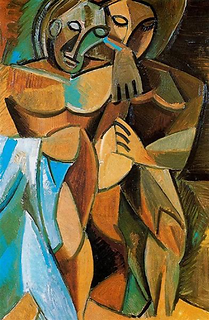
REVERSED
“It is not a lack of love, but a lack of friendship that makes unhappy marriages.” ― Friedrich Nietzsche
In reversal, the snow begins to thaw. The church doors, once sealed, suggest movement from within; a faint sound of opening.
Practically, this points to improvement — debt resolved, illness in remission, support rediscovered. But more profoundly it marks a shift in consciousness: the acceptance of help without shame.
In work, reversed Five of Pentacles signals restoration through collaboration or ethical reform — a return to meaningful craft after exploitation or neglect.
In relationships, it suggests reconciliation or the courage to trust again after abandonment.
Psychologically, this is integration following fracture. The shadow of lack is acknowledged, not denied; one learns that dependence and dignity are not opposites. Reversal here is grace through participation — the rediscovery of belonging.

scene & symbols
I have met in the streets a very poor young man who was in love. His hat was old, his coat worn, the water passed through his shoes and the stars through his soul”
― Victor Hugo , Les Misérables
In my Tribute Tarot, two travellers move through snow outside a shuttered church. The man’s wounded leg bleeds through torn wrappings, echoing another injury elsewhere in the deck — the bandaged head of the Nine of Wands. There the wound belongs to a figure still guarding his ground, battered but defiant. Here the injury appears lower, closer to the earth itself.
The shift is subtle but telling: the warrior’s wound becomes the pilgrim’s. Defence has given way to endurance, and the battle has moved from the walls of the self to the long road of survival. The blind woman beside him wears a small bell and a green cord connects their hands. That thread, almost lost against the snow, becomes the card’s living heart — guidance, guardianship, the tenuous continuity of care.
Behind them the stained glass burns with amber light. Warmth and sanctuary glow within the church, yet its doors remain closed. The pentacles set within the window tracery gleam like emblems of wealth and authority, symbols of a prosperity that illuminates the building but fails to reach the figures outside it.
The travellers do not turn toward the church behind them. They pass its glowing windows and continue forward through the snow. The direction of their movement subtly alters the meaning of the scene. The institution promises warmth yet remains closed; the real continuity of life lies instead in the fragile bond between the two figures. Where structures fail, human loyalty becomes the only shelter that endures. Even in exile, something living still binds the travellers together — a small but enduring resistance to the cold.
shadow
“What though we be poor, must we be cruel too?” — Voltaire
The shadow of the Five of Pentacles lies not only in want but in the moral distortions that often grow around it. Poverty does not automatically ennoble, just as wealth does not automatically corrupt. Hardship can strengthen character, but it can also harden the heart; deprivation may produce courage, yet it may equally breed resentment, dependency, or cruelty. The snow outside the church reveals both truths. Misery exposes character rather than creating virtue.
Voltaire’s question cuts through a sentimental illusion: that suffering itself grants moral authority. History shows otherwise. Desperation can lead to solidarity, but it can also lead to exploitation, rivalry, and the quiet erosion of dignity. In shadow, the Five of Pentacles warns against the comforting fiction that all injustice lies elsewhere. It reminds us that blaming the system is often easier than confronting one’s own agency within it.
At the same time, the card exposes the opposite corruption — the complacency of those who administer charity. Institutions that claim moral virtue while maintaining dependency become mirrors of the same failure. Relief offered without restoration of responsibility can quietly transform compassion into control. The illuminated church window in my card therefore becomes ambiguous: a symbol of mercy, yet also of distance — warmth visible, participation withheld.
Psychologically, the deeper shadow lies in the human temptation to surrender responsibility in exchange for protection. Victimhood can become identity; grievance becomes a currency. The companion who comforts may also enable; the bond that sustains can also imprison. The green cord between my two figures symbolises loyalty and guidance, yet it also raises a darker question: when does companionship sustain resilience, and when does it quietly prevent change?
Ultimately the Five of Pentacles confronts a difficult truth. Civilisations collapse not only from cruelty above but from the gradual erosion of courage below. The card asks whether suffering will lead to bitterness or endurance, dependency or dignity. In shadow, the real danger is neither poverty nor wealth but the slow loss of moral agency — the moment when hardship becomes an excuse rather than a challenge.


here & now
“To feel pity is human; to act upon it is divine.” — Thomas Aquinas
In the modern world the Five of Pentacles reflects a persistent human dilemma: how a society responds to suffering without quietly diminishing the dignity of those who endure it. Compassion is easy to declare but difficult to practise wisely. Systems designed to relieve hardship must continually navigate the narrow path between assistance and dependence, mercy and control.
Contemporary institutions attempt to organise compassion through bureaucratic structures — welfare systems, charities, aid programmes, and social services. These mechanisms often succeed in preventing immediate disaster, yet they also reveal an uncomfortable truth: relief alone does not restore belonging. Material help can alleviate hunger or shelter the body, but it cannot by itself repair the deeper wounds of exclusion, humiliation, or lost purpose.
The card therefore mirrors a tension at the heart of modern civilisation. Prosperous societies are often measured by their capacity to provide support, yet they must also confront the danger of unintentionally fostering passivity or resentment. Assistance that protects life may simultaneously weaken initiative if it replaces participation with dependence. The challenge is not merely to give, but to give in a way that strengthens the agency of the one who receives.
The figures in my card embody this paradox. The green cord binding their hands represents solidarity — the human instinct to guide and sustain one another through adversity. Yet even this bond carries ambiguity. Support can nurture resilience, but it can also become an enclosure if hardship hardens into identity. The difference lies in whether help restores movement or quietly encourages resignation.
Ultimately the Five of Pentacles reminds us that compassion is not simply the alleviation of suffering but the preservation of dignity. A society reveals its moral character not only in how it cares for those who fall, but in whether that care enables them to rise again. True mercy does not merely keep the traveller alive in winter; it helps him find the road forward once the storm has passed.
conclusion
The Five of Pentacles reveals the winter of the material world, where loss strips life to its essentials. Yet even in hardship the fragile thread of human solidarity endures, reminding us that dignity survives not through wealth alone but through the courage to continue together.
vi pentacles
the measure of grace
“It is not the brains that matter most, but that which guides them — the character, the heart, generous qualities, progressive ideas.”
― Fyodor Dostoevsky

myth and meaning
“The charitable give out the door what they have already taken through the window.” — George Bernard Shaw
The Six of Pentacles marks a turning point in the earthy cycle — the moment when survival gives way to moral testing and abundance must reveal its character. After the destitution of the Five, the question is no longer how one endures hardship but how one uses advantage. Prosperity becomes a measure of conscience.
Across history the act of giving has never been simple. Charity has relieved suffering, yet it has also preserved hierarchy. The powerful sustain the vulnerable, but the relationship between them carries an unavoidable tension: generosity can restore dignity, yet it can also reinforce dependence. The scales of justice therefore appear beside the open hand — a reminder that giving is not merely kindness but judgement.
In this sense the archetype of the Six is the Patron — the figure who holds resources and decides how they are distributed. The Patron sustains communities, institutions, and culture, yet his virtue is always tested by pride.
Decan notes: This card corresponds to Moon in Taurus (Second Decan, May 1–10) — the emotional intelligence of matter, the need for security tempered by proportion.

UPRIGHT
“To know when to be generous and when firm—that is wisdom.” ― Edith Wharton
Upright, the Six of Pentacles represents fairness as moral awareness — generosity that is deliberate rather than performative. The act of giving holds value only when respect outweighs vanity.
In work, this card speaks to ethical stewardship: pay fairly, credit honestly, and ensure that cooperation replaces exploitation. Leadership rooted in conscience creates stability where hierarchy once ruled.
In relationships, it warns against emotional dominance disguised as care. True connection grows when both partners give and receive without the need for debt or display.
Spiritually, this is the restoration of proportion after hardship. The measure of grace is neither sacrifice nor indulgence but the steady alignment of conscience with deed.

REVERSED
“The belly is an ungrateful wretch, it never remembers past favours, it always wants more tomorrow.” ― Aleksandr I. Solzhenitsyn
Reversed, the Six of Pentacles exposes the moral economy behind appearances. The crimson of compassion darkens toward pride; the blue of restraint dulls into indifference. Giving becomes image management, the performance of conscience.
In work, this reversal warns of inequitable partnerships and moral exhaustion — of systems that maintain need to preserve control. It describes the façade of fairness masking extraction.
In relationships, it cautions against the kind of affection that binds rather than frees, where support becomes leverage and gratitude a currency.
Psychologically, reversal reveals the ego’s inability to release control. The lesson is to restore mutuality — to give without dominance, to receive without shame. Only then can generosity regain authenticity.

scene & symbols
“Life's under no obligation to give us what we expect.” ― Margaret Mitchell
The composition of this card centres on a controlled exchange between wealth and need. The benefactor stands upright in a crimson cloak that burns against the muted woodland behind him. Crimson suggests intention — generosity warmed by pride. Beneath it, the cooler blue of his robe steadies the image, hinting that conscience guides the hand that gives.
Coins fall deliberately from his fingers while a small pair of brass scales rests in the other hand. Charity is therefore measured rather than impulsive. Each coin descends in a careful arc, transforming generosity into ritual — an act both compassionate and controlled.
Before him kneel two aged figures whose posture carries a different story. The man in ochre leans forward with an expression both intelligent and wary, testing the sincerity of the exchange. His robe holds the colour of earth and labour, suggesting a life once spent contributing to the world that now judges him. Beside him the woman in silver-grey looks upward with quiet composure, embodying need without surrender.
Behind the benefactor rises a pale castle, distant and untouched by hardship. Its towers symbolise inherited security — the architecture of privilege. The woodland path becomes a threshold between two realities: the permanence of advantage and the uncertainty of those who depend upon it.
The scales, the coins, and the kneeling figures together create a visual meditation on balance. Generosity may relieve suffering, yet the positions of the bodies remind us that the act of giving does not erase hierarchy; it merely reveals it.
shadow
“I have never understood why it is "greed" to want to keep the money you have earned but not greed to want to take somebody else's money.”
― Thomas Sowell, Barbarians Inside the Gates
The shadow of the Six of Pentacles lies in the uneasy truth that generosity and power are rarely separate. Charity may relieve suffering, yet it also confirms hierarchy. The giver stands; the receiver kneels. What appears as kindness can quietly become theatre — a ritual through which the powerful reassure themselves of their virtue.
This card rejects the comforting belief that goodness belongs to one class and corruption to another. Poverty does not sanctify; prosperity does not condemn. Both conditions test character. Those who possess must resist pride disguised as benevolence; those who receive must guard against resentment that corrodes dignity.
Archetypally this figure is the Patron — a role that has shaped societies from feudal courts to modern institutions. The Patron sustains culture and community, yet his virtue often requires witnesses. His gift may comfort the poor while preserving the very order that produced their need.
The Six of Pentacles therefore exposes the delicate balance between compassion and authority. True generosity restores dignity; false generosity purchases admiration. Psychologically the deeper shadow lies in dependence. Gratitude may conceal humiliation; generosity may conceal control. When giving becomes display and receiving becomes identity, the relationship hardens into mutual distortion. The scales in the benefactor’s hand therefore measure more than wealth — they measure the uneasy distance between dignity and obligation.
Yet another danger lurks beneath the exchange. When charity becomes the primary response to inequality, the question of labour quietly disappears. Relief may ease suffering without addressing the structures that render work invisible or undervalued. The gift soothes the moment while leaving the deeper imbalance untouched. In this way generosity can unintentionally obscure the very justice it seeks to express.
The Six of Pentacles therefore exposes the fragile balance between compassion and authority. True generosity restores dignity and participation; false generosity purchases admiration while preserving the distance between giver and receiver.

conclusion
The Six of Pentacles stands as the suit’s mirror of conscience — generosity weighed against motive, compassion measured by humility.This card forms the bridge between the hardship of the Five and the labour of the Seven: from dependence toward participation.

here & now
“A man receiving charity practically always hates his benefactor -- it is a fixed characteristic of human nature; and, when he has fifty or a hundred others to back him, he will show it.”
― George Orwell
In the present age the exchange portrayed in this card has not disappeared; it has merely changed costume. The benefactor may now appear as a corporation, a government programme, or a philanthropic institution, yet the essential tension remains: who gives, who receives, and who determines the terms of the exchange.
Modern economies generate extraordinary wealth while leaving many dependent upon structures designed to redistribute it. Assistance prevents hardship from becoming catastrophe, yet it also raises enduring questions about autonomy and responsibility. The challenge is not merely to relieve need but to do so without dissolving initiative or dignity.
Public generosity often unfolds within a culture of visibility. Donations, sponsorships, and aid campaigns become symbols through which institutions declare compassion. Yet the scales remain in the giver’s hand. Even well-intentioned generosity can reinforce asymmetry when the conditions of giving remain unexamined.
At the same time the card reminds us that those who receive are rarely passive figures. The kneeling man and woman represent the unseen labour that sustains prosperous societies — workers displaced by change, elders whose contributions lie behind them, citizens whose value cannot be measured solely by productivity.
The enduring question of the Six of Pentacles is therefore not simply how wealth is shared but how dignity is preserved. Compassion that restores participation strengthens the community; generosity that merely distributes relief risks perpetuating the imbalance it seeks to ease.
vii pentacles
the weight of labour
“In the name of god, stop a moment, cease your work, look around you.” ― Leo Tolstoy

myth and meaning
“Perseverance is not a long race;
it is many short races one after another.” — Walter Elliot
The Seven of Pentacles marks a moment of hesitation — the reckoning between labour and result, when the mind turns inward to measure the worth of its own effort. The figure rests on his staff not out of laziness but from the moral fatigue of purpose. It is a card of reckoning, of endurance tested by waiting.
In my Tribute Tarot, he stands beside the coins he has raised by his own hands. The earth behind him is worked, not wild; he has earned this pause. His posture, however, betrays uncertainty: is the harvest sufficient, or has the labour outweighed its yield? This question forms the card’s ethical centre — the dilemma between persistence and surrender, between investment and futility.
Mythically the Seven recalls the story of Sisyphus — not in the burden of pushing the stone but in the moment between attempts, when the climber pauses and measures whether the ascent is worth repeating. Between one ascent and the next, he looks at the hill and asks not “how,” but “why.”
Decan note for this card: aligns with Saturn in Taurus (Third Decan, May 11–20) — material discipline meeting limitation.

UPRIGHT
“It's hard to beat a person who never gives up.”
― George Herman Ruth
The Seven of Pentacles represents the pause that protects progress. It asks for evaluation before continuation — the courage to stop and see. The card honours work done without fanfare and reminds us that perseverance is not blind repetition but mindful engagement.
In work, it indicates tangible results emerging slowly, often beneath the surface. This is the craftsman’s threshold: knowing that patience is not passivity but mastery in motion. It advises reviewing resources, refining process, and trusting that slow growth sustains longer.
In relationships, the card shows effort tested by time. Love, like cultivation, demands intervals of rest and review; tending, pruning, and waiting are all forms of care.
Psychologically, the card invites us to recognise fatigue without shame. Real growth includes intervals of doubt. The lesson here is that reflection is not retreat — it is the soil of future action.

REVERSED
“I have not failed. I've just found 10,000 ways that won't work.” ― Thomas A. Edison
Reversed, the Seven of Pentacles exposes the darker side of persistence — when patience curdles into paralysis. It signals frustration at slow results or the creeping suspicion that labour has lost its purpose.
In work, it warns of diminishing returns:
Such as overcommitment to a venture whose yield no longer justifies the investment. It can also indicate burnout — giving so much that the will itself grows barren.
In relationships, it suggests imbalance — when nurturing becomes maintenance, and care begins to feel transactional. The reversed card calls for honest appraisal: to rest, to redirect, or to end what no longer grows.
Psychologically, it describes the weary perfectionist who cannot stop tending the field long enough to enjoy the harvest. The fear beneath the exhaustion is existential — not of failure, but of emptiness once the task is done. The advice is simple but difficult: let something rest, even if it still needs you.

scene & symbols
“Patience is bitter, but its fruit is sweet.” — Aristotle
The composition of my Seven of Pentacles unfolds in amber light. The worker’s red tunic radiates warmth and exertion — the living pulse of human labour — while his blue trousers cool the scene, grounding the image in restraint and introspection. His boots do not match: slightly different shade, one strong, one patched. That asymmetry tells a story — of adaptation, of survival without perfection. It is the mark of someone who finishes the job even when the means falter.
Six pentacles lie close to the earth, clustered in the soil like tangible proof of achievement. The seventh, on the left at his feet, symbolises what remains uncertain — the next investment, the lingering question of meaning. The hoe supports his weight as both tool and crutch, the emblem of human perseverance; the field, dark and loamy, absorbs every season’s echo. Behind him, a pale horizon and distant cottages imply comfort, yet he stands apart from them, reluctant to leave his labour’s side.
The moment is dusk: work completed, but reflection unfinished. The scene captures the alchemy of effort — where sweat becomes self-knowledge and patience the highest form of faith.
shadow
“Sloth, like rust, consumes faster than labour wears.”
— Benjamin Franklin, Poor Richard’s Almanack
The shadow of the Seven of Pentacles is stasis mistaken for wisdom — the soul’s reluctance to act dressed in the costume of patience. In the language of myth, this is the ordeal of Sisyphus, condemned to push the same stone, to rehearse the same motion, never quite finishing and never quite failing. It is the compulsion to keep almost there: endlessly reviewing, adjusting, delaying — mistaking movement of thought for movement of life.
Archetypically, this shadow belongs to the Worker-Who-Cannot-Rest and the Dreamer-Who-Cannot-Begin. The first fears collapse if the labour stops; the second fears exposure if it starts. Both live within the same closed circuit — the perpetual remaking of the web. In Jungian terms, it is the ego trapped in the loop of evaluation, unable to commit to the outcome that would redefine it. The crop is inspected until it rots, the plan perfected until the season ends. Paralysis becomes identity; indecision, a creed.
Psychologically, the Seven’s darkness arises from fear of finality — the dread that a finished task might prove one’s limits. To act is to risk failure, but to remain assessing is to preserve the illusion of potential. It is the quiet pathology of the competent: the man who cannot rest because rest feels like death, and the man who cannot begin because beginning might end the fantasy of mastery. The workbench becomes shrine, the garden a laboratory of avoidance.
Reasoned logically, this is entropy disguised as deliberation. The longer we wait to commit, the more the waiting itself consumes vitality. Franklin’s old maxim remains precise: rust corrodes faster than wear. Labour at least renews; idleness, even polished into philosophy, decays. The shadow’s cure is proportion — to know when a pause is restorative and when it is merely fear in fine clothing. The archetypal act of redemption here is simple: to choose. Reap, replant, or relinquish, but move, because perpetual assessment is not prudence — it is the refusal of time.


here & now
“What we call progress is the exchange of one nuisance for another.” — H. A. Overstreet
In our world today, the Seven of Pentacles exposes the confusion between achievement and worth. Everyone is told to “succeed,” but seldom asked at what. We are trained to perform growth, to measure selfhood in output, to chase a perpetual harvest that feeds no one for long.
The man in my card could be any modern producer — caught between love of work and the economy that demands it. He has completed his labour but dreads the next step: selling it. His expression carries that private terror known to all creators: that what he has made, offered with sincerity, will not return material reward. This card asks the same question we do: what counts as success? The answer depends entirely on what you serve. The Seven of Pentacles demands that we examine our personal economics — not only how we earn, but why.
The Seven also points to a different, very pertinent imbalance: entitlement without effort and effort without reward. In complex modern economies the relationship between effort and reward often becomes obscured. Work that sustains society may remain unseen while other forms of gain appear detached from labour.
This is not politics but arithmetic. Every system of support depends on contribution; remove reciprocity and the field collapses. The card’s moral centre is reciprocity itself: contribution matched to capacity, support matched to honest intent. It condemns neither mercy nor aid, only imbalance — the culture of expectation that lets idleness pose as virtue and the culture of exploitation that calls exhaustion a badge of honour.
For the individual, the message is pragmatic: audit the field. If the yield cannot, in reason, sustain you, change the crop; if fatigue is the barrier, rest then re-enter; if dependency has become habit, recover initiative. Both extremes corrode dignity. The remedy is the restoration of proportion — effort rewarded, help restored to its original purpose of re-entry, not escape. The field must feed all who tend it, but none who by choice, only watch it grow. Work, rightly balanced, is not punishment but participation.
conclusion
A figure leans on his staff beside a living harvest of gold. The coins shine, but the meaning remains to be judged. His lesson is proportion: to know when effort serves growth and when it feeds inertia.
Reflection is noble, but only if it leads to motion.
viii pentacles
the meditation in making
“Excellence is never an accident. it is always the result of high intention, sincere effort, and intelligent execution;
it represents the wise choice of many alternatives - choice, not chance, determines your destiny.”
― Aristotle

myth and meaning
“A work of art is the trace of a magnificent struggle.”
— Robert Henri
The Eight of Pentacles represents the sacred discipline of craft — the stage where effort becomes devotion. After the questioning pause of the Seven, labour resumes with renewed clarity. The worker no longer asks whether the work is worth doing; he understands that mastery itself is the reward.
Across myth and history this figure appears in many forms: the medieval apprentice bent over the guild bench, the monk illuminating manuscripts in silence, the alchemist repeating the same experiment until base matter yields its hidden order.
Where the Seven wrestles with doubt, the Eight accepts the law of practice. The card reminds us that mastery is not a single achievement but a rhythm: effort, correction, refinement. Through this process the maker is shaped as surely as the object he creates.
Decan note: The VIII of Pentacles falls under Sun in Virgo (First Decan, August 23–September 1) — the fusion of vitality and precision.

UPRIGHT
“Amateurs sit and wait for inspiration,
the rest of us just get up and go to work.”
― Stephen King
Upright, the Eight of Pentacles honours the quiet dignity of sustained effort. It represents work undertaken not for display but for improvement — the patient refinement through which skill becomes second nature. The craftsman’s devotion lies not in grand ambition but in the simple discipline of returning to the task each day.
In practical terms, the card rewards diligence and personal responsibility. Progress is made slowly but honestly, built through repetition, correction, and the humility to begin again. The Eight favours those who practise their craft in private long before announcing their results. True mastery grows in silence.
In relationships, this card can signify the steady repair of trust or the deepening of shared competence. Like any craft, connection improves through attention: the small gestures repeated over time that transform intention into reliability.
Psychologically, the Eight of Pentacles represents the state of focused absorption in which effort becomes its own reward. The worker ceases to measure each action against outcome and instead enters the rhythm of the work itself. In this way discipline becomes freedom, and labour becomes a form of meditation.

REVERSED
“Work is about a search for daily meaning as well as daily bread.” ― Studs Terkel
Reversed, the Eight of Pentacles reveals what happens when discipline loses its purpose. The careful rhythm of craft hardens into routine, and the work once chosen freely begins to feel like obligation. Precision remains, but meaning drains from the act itself.
In practical terms, this reversal can point to labour performed mechanically — effort expended without growth. The worker repeats the same motion without reflection, mistaking persistence for progress. In such conditions the craft stagnates, and the craftsman with it.
In work and vocation, the card warns of exhaustion through over-production. Perfectionism may tighten its grip, turning improvement into endless correction. When every detail must be flawless, the joy of making disappears and fatigue takes its place.
In relationships, the same pattern can appear as dutiful maintenance without living connection. One continues to “work at it,” yet the care has become procedural rather than sincere.
The remedy is not abandonment of effort but the recovery of intention: to remember why the 'work' began and whether it still serves life.

scene & symbols
“Not to know what has been transacted in former times is to be always a child.”
— Marcus Tullius Cicero
In my VIII of Pentacles, the craftsman works alone beside a sturdy wooden bench set beneath a living tree. His body leans forward in concentration, sleeves rolled, hands steady upon the tool that shapes the pentacle before him. The posture is humble but purposeful: a man absorbed not in ambition but in the discipline of making.
Five finished pentacles climb the trunk of the tree beside him, each fixed in place like rings of growth. They form a visible record of labour already completed — the slow accumulation of skill. One pentacle lies beneath the bench, another rests nearby awaiting its turn, while the eighth takes shape beneath the craftsman’s hands. The arrangement quietly reveals the mathematics of mastery: work done, work underway, and work still to come.
The tree itself anchors the image in nature. Unlike the worked bench, it is organic and rooted, suggesting that true craft grows rather than appears fully formed. Colour reinforces the balance of forces within the act of work. The craftsman’s russet jerkin speaks of earth and endurance, while the cooler blue beneath suggests discipline and clarity of mind. The red cloth across the bench carries the warmth of human effort — the pulse of life within the labour.
Behind him, a small village spreads across the distant hills. Its red roofs echo the colour of the bench cloth, quietly linking the private act of craft with the wider human community it ultimately serves. Yet the worker does not turn toward it. His attention remains fixed upon the pentacle before him.
The scene is therefore not one of isolation but of concentration — the sacred boundary that protects the act of creation. Every tool, colour, and object within the composition speaks of the same truth: mastery is not achieved through spectacle but through attention repeated over time.
shadow
“Perfection is not attainable, but if we chase perfection we can catch excellence.”
— Vince Lombardi
The shadow of the Eight of Pentacles lies in the thin line between devotion and compulsion. The craftsman who seeks mastery may gradually lose sight of the world beyond the workbench. What begins as discipline can harden into obsession, the quiet tyranny of improvement without end.
In this state the work ceases to nourish the soul and instead begins to consume it. Each task demands refinement; every success reveals another flaw. The maker becomes both creator and critic, driven by an inner voice that refuses satisfaction. Hours pass unnoticed, relationships fade into the background, and life narrows to the dimensions of the craft itself.
Historically this shadow has followed many great artisans. The same intensity that produces excellence can also erode balance. When identity fuses completely with the work, failure becomes unbearable and rest impossible. The craft that once offered purpose begins to resemble servitude. It reminds us that even noble effort can consume the life that feeds it. A craft pursued without measure eventually devours its maker.
Yet the lesson of the Eight is not to abandon discipline but to reclaim proportion. True mastery includes the wisdom to step away from the bench, to allow the work to breathe and the self to remain larger than the object being made.


here & now
“Without craftsmanship, inspiration is a mere reed shaken in the wind.”
— Johannes Brahms
In the modern world the Eight of Pentacles speaks quietly against the culture of immediacy. We live in an age that celebrates sudden success, viral recognition, and the illusion of effortless achievement. Yet every enduring craft still follows the same ancient law: repetition, correction, patience, and time.
Across disciplines — whether art, engineering, medicine, writing, or carpentry — mastery emerges only through sustained attention. The hours spent refining a skill rarely appear in the finished work, yet they form its invisible foundation. What the world recognises as talent is often nothing more mysterious than devotion repeated over years.
At the same time, the card asks an uncomfortable question of the present age. In economies that reward speed and constant productivity, the slower virtues of craft can be difficult to sustain. Attention fragments, work accelerates, and the space required for mastery narrows. The Eight reminds us that true skill cannot be rushed without losing its integrity.
Yet wherever a person chooses to learn something well — patiently, honestly, and without spectacle — the spirit of the card survives. The craftsman at his bench still exists in every field where care is valued over applause. The lesson remains simple and timeless: excellence is not a moment of brilliance but a habit of attention.
conclusion
The Eight of Pentacles reminds us that mastery is never granted, only earned through patience and attention. When labour becomes devotion, the work slowly shapes the worker in return.
ix pentacles
a garden of one's own
“You have to do your own growing no matter how tall your grandfather was.” ― Abraham Lincoln

myth and meaning
“You have to do your own growing no matter how tall your grandfather was.” ― Abraham Lincoln
The Nine of Pentacles represents the stage at which labour, patience, and discipline ripen into cultivated independence.
Across history this archetype appears wherever prosperity has been shaped through long attention. The Nine honours the dignity of a life carefully tended, where skill and judgement have worked alongside effort.
Yet the card also carries a quieter reflection. Gardens do not arise by accident; they are cultivated, inherited, or defended. The serenity of the Nine invites consideration of the origins of prosperity — whether this flourishing has been earned through labour, shaped through stewardship, or simply received through fortune.
For this reason the card does not celebrate wealth alone but the discernment required to maintain it. Comfort without awareness becomes indulgence; prosperity tended with gratitude becomes cultivation.
Decan note: This card corresponds with Venus in Virgo (Second Decan, September 2–11) — beauty expressed through order, refinement grounded in discipline, and pleasure tempered by discernment.

upright
“Better a little which is well done,
than a great deal imperfectly.” — Plato
Upright, the Nine of Pentacles shows the quiet dignity of a life carefully cultivated. Labour and discipline have matured into independence, allowing the individual to stand comfortably within the world they have shaped. This is prosperity that grows from attention rather than excess.
In practical terms, the card reflects stability earned through patience and good judgement. Financial security, professional authority, or personal autonomy may now allow greater freedom of movement and choice. Yet the Nine reminds us that such comfort rarely appears suddenly; it is the natural result of many small decisions made wisely over time.
In relationships, the card often describes a stage of confident self-possession. One is no longer defined by the approval or expectations of others. Affection may still be present, but it exists alongside a strong sense of individual identity.
Psychologically, the Nine of Pentacles symbolises inner sufficiency — the ability to enjoy one’s own company and to take pleasure in the cultivated life one has built. The garden becomes a reflection of the self: ordered, abundant, and maintained with care.

reversed
“No man is an island entire of itself.”
— John Donne
Reversed, the Nine of Pentacles questions the stability of the cultivated life. The garden may still appear abundant, yet its harmony begins to feel fragile. Independence risks drifting toward isolation, and comfort may conceal a quiet dependence upon circumstances that cannot be fully controlled.
In practical terms, this card can suggest a lifestyle sustained more by appearance than by solid foundations. Prosperity may be maintained through habit or inheritance rather than active stewardship.
In relationships, the reversal can indicate emotional distance disguised as self-sufficiency. A person may appear entirely self-contained, yet the independence they display begins to resemble a wall rather than a freedom.
Psychologically, the reversed Nine warns against confusing refinement with fulfilment. A carefully arranged life can become a beautiful enclosure if it no longer invites growth or genuine engagement with the wider world.

scene & symbols
“Nature alone is antique, and the oldest art a mushroom.”
— Thomas Carlyle
In my Tribute Tarot the figure stands within a cultivated enclosure, surrounded by the quiet abundance of a tended garden. Her posture is upright and composed, neither triumphant nor idle. The gesture of the body suggests familiarity with this space — not the curiosity of a visitor but the calm authority of one who belongs here.
The vine climbing beside her carries clusters of ripe grapes, symbols of patience rewarded and cultivation brought to fruition. Unlike the solitary labour of the earlier cards in the suit, this abundance has already taken root and begun to sustain itself. The garden reflects long care rather than sudden fortune.
Perched upon the woman’s gloved hand sits a trained falcon, its presence introducing a note of alert intelligence into the scene. Here it becomes a symbol of controlled instinct — the mastery of appetite and impulse that allows prosperity to remain balanced rather than indulgent. The bird rests upon a yellow gauntlet worn on the woman’s right hand. Yellow, the colour of intellect and clarity, combined with the right hand of action, suggests conscious authority over instinct.
The coin held lightly in the hand reminds us that this cultivated life rests upon material foundations. Wealth appears here not as spectacle but as quiet security. The pentacle is neither hoarded nor displayed; it is simply present, integrated into the rhythm of the garden.
Behind the figure rises a Tudor house, solid and enduring, its architecture suggesting continuity and stability across generations. It anchors the image in human history, reminding us that cultivated landscapes are rarely solitary achievements. They grow from long traditions of care, labour, and inheritance.
The garden itself forms a subtle boundary around the scene. Unlike the open landscapes of earlier cards in the suit, this space is contained and deliberate. Within its walls the natural world has been shaped by human attention. The result is not wilderness but cultivation — nature guided rather than conquered.
shadow
“The possession of wealth does not always exclude the possibility of poverty of spirit.”
— John Ruskin
The shadow of the Nine of Pentacles lies in the quiet seduction of comfort. A life carefully cultivated can gradually close in upon itself, transforming independence into enclosure. The garden that once symbolised freedom may slowly become a boundary separating the individual from the wider human condition.
Prosperity, when enjoyed without reflection, can dull the awareness that originally made it possible. The labour, discipline, and patience that produced the garden fade from memory, leaving only the pleasure of its fruits. In this state abundance risks becoming entitlement, and cultivation drifts toward indulgence.
Historically, societies have often struggled with this same tension. Wealth accumulated through generations can create refinement and stability, yet it may also produce fragility if the habits that sustained it are forgotten. Gardens untended eventually decline; prosperity without stewardship quietly erodes.
Psychologically, the deeper shadow appears when identity becomes fused with comfort itself. The individual begins to define the self through possessions, surroundings, or social position. Yet such foundations are inherently unstable. When circumstances shift, the carefully maintained garden may reveal itself to be less secure than it once appeared.
The lesson of the Nine is therefore not to reject prosperity but to remain awake within it. True cultivation requires continual attention — not only to the vines and walls of the garden, but to the character of the one who tends it.

here & now
“The world is too much with us; late and soon,
Getting and spending, we lay waste our powers.”
— William Wordsworth
In the present age the garden of the Nine of Pentacles appears increasingly rare. Many lives are lived in constant motion — economies that demand productivity, cultures that reward display, and systems that quietly measure worth through accumulation alone. Under such conditions the idea of a cultivated life can seem almost subversive.
Yet prosperity itself has become a complicated symbol. In some hands it represents the fruit of discipline and foresight; in others it reflects inheritance, advantage, or circumstances beyond personal control. The garden therefore raises an uncomfortable question: who truly cultivates the ground, and who merely inherits its harvest?
Modern societies wrestle constantly with this tension. Some condemn wealth outright, while others treat it as proof of virtue. Both positions miss the deeper truth. Prosperity, like a garden, reveals the character of the one who tends it. In careful hands it produces stability and refinement; in careless ones it becomes indulgence or decay.
The woman in the garden stands apart from this noise. She neither flaunts her comfort nor apologises for it. Her life has been shaped — whether through labour, inheritance, or a combination of both — and the responsibility of maintaining that balance remains hers.
The Nine of Pentacles therefore offers a quiet challenge to the modern world: cultivate something worthy of the space you occupy. Prosperity alone is not the achievement. The true measure lies in the character that sustains it.
conclusion
The Nine of Pentacles reminds us that a life well cultivated does not arise by accident.
Whether earned, inherited, or slowly assembled over time, every garden demands the same quiet discipline: attention, discernment, and the character to sustain what has been created.
x pentacles
the house of legacy
“A society grows great when old men plant trees in whose shade they shall never sit.” — Greek Proverb

myth and meaning
“Tradition is not the worship of ashes, but the preservation of fire.” — Gustav Mahler
The Ten of Pentacles closes the suit of earth with the grandeur and gravity of completion. Here, the material world has matured into architecture and order — wealth made durable, history made visible. After the personal independence of the Nine, this card opens into a wider inheritance: lineage, community, civilisation.
Recognition and belonging live in the small acts, not the monuments. Legacy preserves memory, yet it also shapes the story that memory tells. The Ten of Pentacles asks whether what we have built continues to serve the living, or merely guards the dead.
Still, this is not a card of loss. It speaks of stewardship, of what must be preserved if humanity is to retain coherence. Traditions, institutions, and inherited wisdom form the ground on which we all stand. Without them, we collapse into amnesia and division.
The Ten of Pentacles aligns with the Third Decan Virgo (September 12 – 22), blends intellect with continuity, suggesting an inherited wisdom — the mind as architect of legacy.

upright
“They are not dead who live in hearts they leave behind.” — Thomas Campbell
The Ten of Pentacles signifies the moment when work and wisdom settle into permanence — the visible architecture of human effort. It represents wealth or legacy earned through perseverance and moral proportion, not mere accumulation.
In work or vocation it points to lasting structures — institutions, houses, or traditions built carefully enough to outlive their makers.
In relationships it symbolises belonging — the trust that spans generations, the harmony of family or community built through respect. Love here appears in the quieter forms of care and continuity — the habits that allow a household or community to endure.
Psychologically, the card reflects maturity — a grounded understanding of one’s place in a larger story. The ego finds peace in stewardship, learning to guard without controlling.

reversed
"If we inherit injustice and do not alter it,
we become its executors." — The Tribute Tarot
When reversed, the Ten of Pentacles warns of inheritance without integrity — the slow decay of meaning beneath polished tradition. Success loses its purpose, lineage becomes vanity, and comfort narrows into isolation.
In work, this may appear as institutions repeating themselves, reputation replacing substance, or leadership deaf to renewal.
In relationships, the card shows detachment and duty without affection, loyalty demanded but rarely returned. Emotional warmth cools into expectation, and connection becomes obligation rather than exchange.
Psychologically, the reversal reveals the fear of decline — the impulse to defend what once worked rather than allow it to change. Preservation becomes rigidity, and tradition hardens into authority. Tradition must remain a bridge, not a wall.

scene & symbols
“The past is never dead. It’s not even past.” — William Faulkner
The architecture of the card is its first and most commanding symbol. A heavy stone archway dominates the composition, marking the threshold between the private world of the household and the open city beyond. Such gates promise entry and belonging, yet they also imply the possibility of refusal. The Ten of Pentacles therefore presents legacy not simply as inheritance, but as a boundary that determines who may pass within.
An old man sits at the edge of the gate, wrapped in robes embroidered with ancient symbols. He resembles a figure returned from long wandering — an echo of Ulysses arriving home after years of absence. Yet the welcome is uncertain. The household does not gather around him. Inside the arch a man, woman, and child stand together, but each faces a different direction. The man turns outward toward the distant horizon, as though his attention lies beyond the walls entirely. The woman looks downward, absorbed in her own reflection. The child glances back toward the elder with tentative curiosity.
At the old man’s feet a dog offer a quieter truth. It greets him instinctively, recognising the returning master even where human bonds have cooled. The other remains watchful. Dogs in the language of symbolism represent loyalty and memory — the ancient instinct that remembers what the mind may deny.
The pentacles themselves are divided between permanence and uncertainty. Several are set firmly into the masonry of the gate, wealth transformed into architecture and tradition. Yet three coins float freely in the air above the arch. They appear neither fixed nor falling, suggesting that inheritance is never entirely stable.
Taken together, the scene reveals the deeper paradox of the Ten of Pentacles. Wealth and lineage can build walls strong enough to endure centuries, yet belonging within those walls remains fragile. Legacy promises continuity, but it does not guarantee recognition, warmth, or welcome.
shadow
“The excluded remember more clearly than the included.” — Elias Canetti
The shadow of the Ten of Pentacles lies in exclusion — the darker instinct to guard legacy by deciding who belongs within it and who does not. Houses built to preserve continuity can also become places where inconvenient truths are quietly turned away at the gate.
Old stories recognised this danger long before modern psychology named it. In the tale of Sleeping Beauty, one fairy is not invited to the royal christening. The omission appears minor, a guest list arranged to preserve harmony. Yet the absence becomes the source of the curse that shapes the kingdom’s future. What is refused entry does not disappear; it waits.
Archetypally this is the banished heir, the unwelcome truth, or the forgotten branch of the family tree — the part of lineage that respectable history prefers not to acknowledge. The house retains its splendour, yet something beneath the surface begins to harden. The shadow here is not poverty but isolation: the slow petrification of privilege when continuity is defended without conscience.
Psychologically, the card reveals how families and institutions preserve identity by simplifying the past. Stories are adjusted, loyalties enforced, and difficult memories quietly denied so that the structure remains intact. Yet what is suppressed rarely vanishes. It lingers in the margins of memory like a ghost outside the walls.
The deeper warning of the Ten is therefore not about inheritance itself, but about the spirit in which inheritance is guarded. Legacy demands belonging; remove that, and the structure hollows from within. The ghosts we fear most are often those we ourselves refused to welcome home.


here & now
“The tradition of all dead generations weighs like a nightmare on the brains of the living.”
— Karl Marx
In the modern world the structures symbolised by the Ten of Pentacles remain everywhere, though we rarely notice them. Families, institutions, and nations inherit not only wealth but authority — the quiet assumption that what has endured must therefore be right. Houses, titles, reputations and traditions pass from one generation to the next, shaping opportunity long before individual effort enters the story.
Yet inheritance carries a quieter tension. Every lineage preserves certain memories while allowing others to fade. The official story of the house — whether family, institution, or nation — tends to favour continuity over complication. Difficult chapters soften, inconvenient figures disappear, and the past is arranged into a narrative that supports the present order.
This is how legacy acquires power. What is remembered becomes tradition; what is forgotten becomes absence. The gate appears stable, yet those who stand outside it know how easily belonging can be decided by those within.
The Ten of Pentacles therefore reminds us that inheritance is not only material but moral. Each generation receives structures it did not build — houses, institutions, customs, and stories. Whether those structures remain living foundations or harden into walls depends upon the courage of those who inherit them.
Legacy at its best is stewardship: the willingness to preserve what deserves endurance while allowing the house to remain open to renewal.
conclusion
The Ten of Pentacles reminds us that legacy is not only what a house preserves, but also whom it refuses to admit.
For when the gate closes against truth, the curse has already entered.
page of pentacles
the student of substance
“The beginning of wisdom is the definition of terms.” — Socrates

myth and meaning
“Without discipline, talent is a liability.”
— Ray Bradbury
The Page of Pentacles marks the beginning of the court of Earth — the moment when curiosity turns toward practice. She represents the discipline of learning: the stage of growth that demands patience, repetition, and attention to small but real gains. In the language of the suit, knowledge is not abstract but material; it must be tested in the world before it becomes understanding.
As the first figure of the Pentacles court, the Page embodies apprenticeship. She stands at the threshold between potential and craft, where enthusiasm must submit to structure. This is the stage where ideas meet resistance — where the mind learns that effort, not inspiration, is the true engine of creation.
The archetype is ancient: the student before the master, the novice in the workshop, the young thinker discovering that mastery grows slowly. The Page does not yet possess skill, but she possesses something more valuable — the willingness to begin at the beginning.
Decan note for this card: aligns with Mercury in Taurus (First Decan, April 20–30) — curiosity disciplined into skill.
UPRIGHT
“I am not afraid of storms,
for I am learning how to sail my ship.”
― Louisa May Alcott, Little Women
Upright, the Page of Pentacles represents the quiet dignity of beginning properly. Curiosity becomes commitment, and attention replaces impulse. It marks the stage where enthusiasm submits to method — the willingness to practise before expecting results.
In work or study, this card signals the start of a serious apprenticeship. A craft, vocation, or body of knowledge asks for patience and steady effort. Progress may be slow, but it is real. The Page reminds us that every enduring structure is built from small acts repeated well.
In relationships, the card suggests sincerity and attentiveness rather than display. Affection grows through reliability — through listening, learning, and the willingness to build something gradually.
Psychologically, the Page of Pentacles reflects the grounding of thought in action. Ideas begin to take form through practice. Wisdom here is modest and practical: the understanding that mastery begins with humility.

REVERSED
“Any fool can know. The point is to understand.”
― Albert Einstein
Reversed, the Page of Pentacles warns of distraction, impatience, or the temptation to abandon learning before the work has truly begun. Curiosity becomes scattered; interest replaces commitment. The promise of skill fades when effort is inconsistent.
In work or study, this card may point to missed opportunities through lack of preparation or focus. Talent without discipline remains unrealised. The reversed Page reminds us that potential alone creates nothing.
In relationships, it can signal immaturity or promises made lightly. Good intentions exist, but follow-through is uncertain. Trust requires steadiness that has not yet been developed.
Psychologically, the reversal reveals restlessness — the desire to possess knowledge without submitting to the process that creates it.
The remedy is simple but demanding: return to the beginning, attend to the small task at hand, and allow understanding to grow through practice.

scene & symbols
"Perfect confidence is granted to the less talented as a consolation prize."
Robert Hughes
The Page stands quietly in an open meadow, holding a single pentacle before her with careful attention. Unlike the triumphant gestures of other cards, the coin is not raised in display but studied with calm concentration. Her posture is steady and grounded, suggesting that the true movement of the card is inward rather than outward.
The landscape reflects this sense of patient growth. Soft green fields stretch toward distant mountains that rise faintly against the horizon. These peaks represent future mastery — achievements that remain far away but visible. The Page does not attempt to reach them yet; she studies the coin in her hand, understanding that every distant summit begins with small, deliberate steps.
Colour reinforces the symbolism of the scene. The Page wears red, the colour of vitality and action, yet it is balanced by the surrounding green of the earth — the realm of growth, patience, and cultivation. Above her the sky glows yellow, the colour of intellect and clarity. Thought, effort, and environment therefore form a quiet harmony within the image.
The pentacle itself rests low in the composition, close to the body and near the centre of gravity. This is not wealth displayed but matter examined. The coin becomes a symbol of learning through contact with the real — knowledge that must be held, weighed, and understood before it can be used.
The scene contains no drama and no urgency. Instead, it presents the first and most important stage of mastery: attention.
shadow
The shadow of the Page of Pentacles emerges when curiosity loses its discipline. The desire to learn becomes the desire to appear knowledgeable, and study turns into display. The coin is admired rather than examined, its promise valued more than the labour required to understand it.
Throughout history the apprentice has always faced this temptation. The early stages of learning bring enthusiasm and admiration, yet true skill demands repetition, correction, and humility. When these are avoided, knowledge becomes superficial — a collection of beginnings rather than a path toward mastery.
In this state the Page becomes the collector of unfinished pursuits: the student who never completes the apprenticeship, the enthusiast who abandons each craft when its difficulty becomes clear. Ideas are gathered eagerly but rarely tested against the resistant reality of practice.
The myth of Icarus offers a fitting image of this shadow. Not the tragic hero of poetry, but the impatient apprentice who ignores the careful instructions of the master craftsman. The wings appear magnificent at first, yet enthusiasm alone cannot sustain flight.
The Page reminds us that knowledge is not proven by curiosity but by endurance. Without discipline, the promise of learning quietly collapses under its own ambition.


here & now
“The trouble with our times is that the future is not what it used to be.”
— Paul Valéry
In the present age the shadow of the Page of Pentacles appears in a culture saturated with information yet impatient with mastery. Knowledge is consumed quickly, shared instantly, and replaced just as rapidly. The slow disciplines that once shaped learning — apprenticeship, repetition, correction — are often treated as obstacles rather than foundations.
This environment encourages the illusion that understanding can be gathered rather than earned. Credentials multiply, opinions travel widely, and expertise is often claimed long before the craft itself has matured. The result is not ignorance but something more complicated: the appearance of knowledge without its depth.
Yet the Page offers a quiet correction to this pattern. Every genuine craft, whether intellectual or practical, still demands the same ancient process. Attention must be sustained, mistakes must be endured, and the body as well as the mind must learn the rhythm of the work.
Where the modern world rewards speed, the Page of Pentacles honours patience. It reminds us that mastery grows slowly, like a seed beneath the soil — unseen at first, yet quietly preparing the ground for something real.
conclusion
The Page of Pentacles stands at the beginning of the long work of mastery.
Curiosity has discovered its object, but the real task lies ahead — to study it patiently until knowledge becomes skill.
knight of pentacles
the path of persistence
“I am a slow walker, but I never walk back.” ― Abraham Lincoln

myth and meaning
“Dripping water hollows out stone, not through force but through persistence.” ― Ovid
The Knight of Pentacles represents the mature discipline of labour — the stage at which effort ceases to be temporary and becomes character. Where the Page studies the craft, the Knight lives inside it. His progress is neither swift nor dramatic; it is measured by repetition, patience, and the quiet accumulation of results.
In the court of Earth he is the figure of endurance. Inspiration has already passed; what remains is the work itself. The Knight continues where others grow restless, trusting method rather than impulse. His strength lies not in brilliance but in reliability — the rare ability to remain steady when enthusiasm fades.
Historically this archetype appears in figures such as the Roman farmer-soldier Cincinnatus, who left his plough only long enough to serve his city before returning to the field. Such stories celebrate a virtue older than ambition: the dignity of labour performed for its own sake, guided by duty rather than applause.
Decan note: The Knight of Pentacles is linked to the Third Decan of Virgo (September 12–22), It is the decan of stewardship — the mind directing the hand until both act as one.

upright
“Even if I knew that tomorrow the world would go to pieces, I would still plant my apple tree.”
― Martin Luther
Upright, the Knight of Pentacles represents constancy — the rare ability to continue when enthusiasm fades. Where others seek inspiration or recognition, the Knight finds dignity in the simple completion of the task before him.
In work or vocation, this card points to mastery built through repetition. Skill emerges gradually through careful attention, through the willingness to perform necessary tasks day after day until they are done well. The Knight reminds us that the foundations of every lasting structure are laid quietly, long before the visible success appears.
In relationships, his loyalty appears through presence rather than passion. Care is expressed through reliability — through promises kept, responsibilities shared, and the quiet steadiness that sustains a life built together.
Psychologically, the Knight restores rhythm where disorder once ruled. He reflects a mind that has accepted the value of discipline: work undertaken not for applause but for completion.

reversed
“Habit is either the chain or the framework o freedom.”
— Seneca
Reversed, the Knight of Pentacles reveals the shadow of devotion — persistence that has lost its purpose. What once appeared as discipline becomes routine maintained simply because it has always been so. The virtues of patience and reliability harden into inertia.
In work, this may appear as labour performed without reflection. Projects continue from obligation rather than conviction; systems persist simply because no one questions them. Effort remains constant, yet progress quietly disappears.
In relationships, loyalty becomes mechanical. Commitment survives, but vitality fades. Love turns into duty, and care into habit. Stability remains, yet the living spirit of connection gradually diminishes.
Psychologically, the reversed Knight often signals exhaustion disguised as virtue. The individual continues the task long after its meaning has faded, mistaking endurance for purpose.
The lesson of the reversal is therefore simple but demanding: persistence must serve life, not replace it.

scene & symbols
“All of old. Nothing else ever. Ever tried. Ever failed.
No matter. Try again. Fail again. Fail better.”
― Samuel Beckett
The Knight sits motionless upon a dark horse, holding the pentacle before him with quiet attention. His red tabard and glove suggest energy contained rather than spent — action disciplined into restraint. Gold embroidery traces the garment, marking labour elevated to craft. The coin in his hand is not a prize but a measure: he studies it as a worker examines the quality of his own work.
The horse beneath him is broad, powerful, and completely still. It is not the restless charger of other knights but a creature of endurance. Around its head rests a wreath of holly — evergreen through winter — a symbol of constancy that survives the turning of seasons.
The landscape mirrors the Knight’s character. The land has already been worked; fields stretch in ordered curves across the earth. Nothing here is wild or dramatic. The sky glows with the late yellow light of afternoon, the hour when labour begins to feel the weight of time.
The composition emphasises stillness. Among the Knights of the tarot this is the only rider who does not move. His strength lies in refusal — the discipline to remain until the work is done.
shadow
“Before the reward there must be labour.” — Hesiod
In the modern world the Knight of Pentacles stands both as reminder and warning. He represents the individual who continues the work when others grow restless — the one who values steadiness over spectacle. Yet the world around him has changed its rhythm. Labour once respected as the foundation of civilisation now passes largely unseen, while speed and novelty claim the applause.
This tension lies at the heart of the card’s presence today. Many lives are built upon repetition — the daily tasks that sustain families, institutions, and communities. Yet the culture surrounding those tasks increasingly celebrates disruption rather than endurance. The patient worker becomes invisible beside the restless innovator.
The Knight therefore speaks to a quieter modern dilemma: the difference between persistence and purpose. To continue faithfully in one’s task may be an act of integrity, yet the same persistence can also conceal exhaustion or habit. When routine becomes unquestioned, labour risks continuing long after its meaning has faded.
In this sense the Knight belongs not to one era but to every age that measures worth through effort. He reminds us that steadiness remains one of civilisation’s least celebrated virtues. Fields are cultivated, systems maintained, and lives supported not by flashes of brilliance but by the slow reliability of those who continue showing up.
The challenge of the present moment is therefore not whether we can persist — most people already do. The deeper question is whether persistence still serves something living. The Knight restores proportion: endurance that nourishes life remains a virtue; endurance that survives only out of habit quietly becomes its opposite.


here & now
“Loyalty to petrified opinion never yet broke a chain or freed a human soul.”
— Mark Twain
In the modern world the Knight of Pentacles stands both as reminder and warning. He represents the individual who continues the work when others grow restless — the one who values steadiness over spectacle. Yet the world around him has changed its rhythm. Labour once respected as the foundation of civilisation now passes largely unseen, while speed and novelty claim the applause.
This tension lies at the heart of the card’s presence today. Many lives are built upon repetition — the daily tasks that sustain families, institutions, and communities. Yet the culture surrounding those tasks increasingly celebrates disruption rather than endurance. The patient worker becomes invisible beside the restless innovator.
The Knight therefore speaks to a quieter modern dilemma: the difference between persistence and purpose. To continue faithfully in one’s task may be an act of integrity, yet the same persistence can also conceal exhaustion or habit. When routine becomes unquestioned, labour risks continuing long after its meaning has faded.
In this sense the Knight belongs not to one era but to every age that measures worth through effort. He reminds us that steadiness remains one of civilisation’s least celebrated virtues. Fields are cultivated, systems maintained, and lives supported not by flashes of brilliance but by the slow reliability of those who continue showing up.
The challenge of the present moment is therefore not whether we can persist — most people already do. The deeper question is whether persistence still serves something living. The Knight restores proportion: endurance that nourishes life remains a virtue; endurance that survives only out of habit quietly becomes its opposite.
conclusion
The Knight of Pentacles reminds us that endurance is a virtue only when it still serves life.
Persistence alone is not the goal; the work must remain worth doing.
queen of pentacles
the custodian of care
“What we call our daily bread is the fruit of long patience and unremitting labour.” — Goethe

myth and meaning
“To forget how to dig the earth and to tend the soil is to forget ourselves.” — Mahatma Gandhi
The Queen of Pentacles embodies the principle of sustenance — the transformation of effort into comfort, and comfort into care. She is the archetype of stewardship, expressing power not through possession but through preservation. Where the King builds, she maintains; where others accumulate, she circulates.
Prosperity under her influence is rarely spectacular; it grows gradually through patience, prudence, and care. Her authority lies in the understanding that what sustains life must be tended continuously. Wealth that is not cultivated fades.
The Queen therefore represents the mature expression of the earth element: stability joined with nourishment. She reminds us that prosperity is not merely the acquisition of resources but the wisdom required to preserve and distribute them. Her strength lies in continuity — the quiet guardianship that allows households, communities, and traditions to endure.
Decan note: The Queen aligns with the third decan of Capricorn (10–19 January) It represents structure ripened into wisdom, discipline matured into stewardship.

UPRIGHT
“There is no delight in owning anything unshared.” — Seneca
Upright, the Queen of Pentacles represents the mature expression of material grace — the ability to sustain without domination and to prosper without pride. She governs by tending, not ruling, demonstrating that permanence grows through patience rather than possession.
The upright Queen brings tangible progress: finances stabilised, projects completed, communities strengthened. She governs through practical empathy — standards applied with understanding, structure balanced by warmth. Under her influence environments thrive because their foundations are just.
In relationships, she embodies grounded love — fidelity expressed through the small acts that make others feel safe. She builds homes rather than stages, creating trust that outlasts infatuation. Her affection is neither dramatic nor abstract: it feeds, shelters, and quietly endures.
Psychologically, the upright Queen represents integration — instinct joined with order, feeling joined with judgement. She accepts responsibility without resentment because she recognises its purpose. Her strength lies in the balance between nurture and boundary: the wisdom to give without losing herself.

REVERSED
“Attention is the rarest and purest form of generosity.”
— Simone Weil
Reversed, the Queen of Pentacles warns of the imbalance that follows when care exceeds capacity. What was generosity becomes depletion; what was order becomes rigidity. The instinct to nurture slips gradually into the need to control.
In work, this reversal may reveal overextension — the professional who carries too much, mistaking exhaustion for integrity. Systems falter because control has replaced trust. Responsibilities accumulate, yet the original purpose behind them fades from view.
In relationships, devotion risks turning into suffocation. Care may become conditional, affection measured against effort or sacrifice. The Queen who once sustained others may begin giving in order to secure loyalty or gratitude.
Psychologically, the reversed Queen exposes the fatigue of perpetual responsibility. Identity becomes trapped within the role of provider or caretaker. The instinct to nurture remains genuine, yet without balance it becomes a burden rather than a gift.
The reversal therefore calls for proportion. True generosity must include limits, for care that exhausts itself cannot continue to sustain others.

scene & symbols
“Nature, to be commanded, must be obeyed.” Francis Bacon
The scarlet dress anchors the Queen to vitality and blood — the will to preserve life through effort. Her green cloak tempers that vitality with composure, expressing growth held within structure. The pentacle rests lightly in her hands, suggesting discernment: the ability to recognise when to give, when to keep, and when to rest. It represents both sustenance and boundary.
Roses wind across her throne, symbols of cultivated beauty — nature shaped through patience rather than force. Their thorns remind us that creation demands effort and protection. Beneath the throne, the ram’s head carved into the living rock introduces a masculine note of determination within this maternal landscape: endurance stabilising nurture.
At her feet a rabbit crouches quietly, ancient emblem of fertility, gestation, and renewal. Around her small flowers gather in the grass — the quiet abundance that emerges when the land is cared for rather than conquered. Mountains rise behind her in calm permanence, framing the horizon with the reminder that all prosperity rests upon enduring ground.
shadow
“To handle yourself, use your head; to handle others, use your heart.”
― Eleanor Roosevelt
The shadow of the Queen of Pentacles arises when stewardship becomes possession — when the desire to nurture slips into the will to control. In shadow, her garden is immaculate yet sterile; her throne a monument to efficiency but devoid of warmth. The coin once held lightly presses into her palm until it leaves its mark. Benevolence remains in appearance, yet anxiety grows beneath it.
This Queen stands at the uneasy threshold between nurture and domination. The same instinct that sustains life can also confine it. When care becomes conditional, generosity turns strategic; kindness becomes currency. What begins as protection quietly transforms into management.
Archetypally her darker reflection stretches from Demeter’s consuming grief to the calculating daughters of King Lear — figures whose devotion masks the desire to possess what they claim to protect. Their language remains that of love and duty, yet beneath it lies a subtle accounting.
In such figures we glimpse the corruption of the domestic sphere: affection wielded as leverage, stewardship transformed into quiet authority. Their tyranny rarely appears violent; it organises itself politely, tidies itself, and calls itself care.
Psychologically, this shadow reveals a deep fear of irrelevance. The Queen cannot stop giving because to stop would require confronting who she is without the role of caretaker. Her generosity becomes theatre, her compassion a form of governance. Virtue without humility slowly curdles into quiet domination.


here & now
“What do we live for, if it is not to make life less difficult for each other?”
— George Eliot
Yet the modern world also reveals the complexity hidden within this virtue. Care is rarely neutral. To sustain others is also to hold a form of influence over them, and the line between protection and control can easily blur. In personal relationships this may appear in the figure who “helps” in order to remain indispensable — the parent who cannot release the child or visa versa, the partner who confuses devotion with supervision. Assistance becomes a means of preserving importance.
The same dynamic extends beyond the household. Many modern institutions are organised around the management of care: healthcare systems, charitable organisations, welfare structures, and professions built upon service. At their best they embody the Queen’s principle of stewardship — the collective tending of life’s fragile ground. Yet these systems can also consume the compassion that sustains them, exhausting those who labour within them while quietly transforming care into administration.
Psychologically this card touches a deeper human tension. To nurture others provides meaning, identity, and belonging. Yet when identity becomes inseparable from the role of caretaker, the individual risks losing the freedom to step away. The instinct to provide can become a defence against confronting the self without responsibility.
The Queen therefore asks a subtle question of the present age: when does care truly nourish, and when does it begin to bind? The difference lies in proportion. Care that sustains life also prepares others to stand independently; care that seeks gratitude or dependence quietly becomes possession.
In this sense the Queen remains the moral centre of the earth suit. She reminds us that prosperity is not measured only by what we gather, but by how we sustain one another. The true test of nurture is simple: whether those we care for become stronger in our presence, or smaller.
conclusion
The Queen of Pentacles reminds us that prosperity is sustained not by possession but by care.
What she tends grows; what she neglects quietly fades.
king of pentacles
the law of substance
“A wise man should have money in his head, but not in his heart.” — Jonathan Swift

myth and meaning
“Riches are not an end of life, but an instrument of it.”
— Henry Ward Beecher
The King of Pentacles embodies the completion of earth’s long labour — the mastery of form through time, the reconciliation of power with peace. His realm is the cultivated world: fields, cities, storehouses, the architecture of continuity. He represents the ideal of material authority made ethical.
Mythologically, he stands in the line of Bacchus / Dionysus, god of the vine and of fruitful order. In the ancient cults of fertility, Dionysus was not only intoxication but the discipline of the harvest — the transformation of chaos into culture. The King of Pentacles holds this dual inheritance: abundance made civilised, appetite governed by understanding.
Thus his myth is not conquest but custodianship. He is the human inheritor of the old gods’ original task: to make chaos bear fruit, to ensure that pleasure and responsibility coexist. If Dionysus teaches ecstasy, the King teaches its management; if the vine is divine, he is the gardener who keeps it alive.
Decan note: He corresponds to the first decan of Taurus (20 – 30 April), the fixed earth where fertility becomes form — the season of seed made stable, and labour rewarded through endurance.

UPRIGHT
“Not what we have But what we enjoy, constitutes our abundance.” ― Epicurus
The King of Pentacles signifies stability earned and authority maintained through proportion. He is the archetype of wise governance — material mastery sustained by ethical sense.
In work, this card denotes success that honours its sources: the builder, leader, or craftsman who understands that prosperity must remain humane. He embodies reliability, long planning, and the quiet prestige of competence. Wealth here becomes infrastructure — a tool to sustain, not a trophy to display.
In relationships, he brings trust and constancy. His affection is expressed through deeds — the daily acts that make continuity possible. To love in his manner is to provide safety without possession.
Psychologically, the upright King marks integration between instinct and intellect, security and service. He reconciles matter with morality: stewardship as sacrament. He teaches that abundance gains meaning only when distributed wisely.

REVERSED
“There's a capacity for appetite," Samuel said, "that a whole heaven and earth of cake can't satisfy”
― John Steinbeck, East of Eden
The King of Pentacles exposes the corruption of prosperity. When balance collapses, the builder becomes hoarder, and care turns to control. His green robe stiffens into armour; his vineyards choke on their own fruit.
In work, this card warns against the misuse of power — manipulation, greed, or self-satisfaction disguised as prudence. The reversed King clings to systems that once worked, defending routine for its own sake. The sceptre enforces rather than guides; the coin is counted, not shared.
In relationships, he may appear generous yet expect tribute in return. Affection becomes transaction; protection curdles into ownership. The red shoes that once signified action now mark inertia — a refusal to step down or evolve.
Psychologically, the reversal points to stagnation at the top: the ego that cannot adapt because it fears loss of status. It is idolatry of matter — forgetting that the vine must be pruned to survive.

scene & symbols
“The good man is the friend of all living things.” — Gandhi
In my Tribute Tarot, the King sits on a throne carved from the living rock, its arms shaped into bulls’ heads — emblems of patience, stability, and controlled might. The stone seems half-grown, half-built: nature and architecture intertwined. Around the base, vines heavy with grapes climb, proof that wealth must remain alive to remain real.
He wears a light-green robe woven with gold, signifying the marriage of growth and wisdom; his red shoes mark vitality and human appetite anchored in duty. The sky behind him is dark yellow, the tone of late harvest and completion. His posture is relaxed, neither complacent nor tense — the ease of authority that has learned moderation.
In his right hand, he holds the sceptre, symbol of responsibility; in his left, the golden pentacle, emblem of stewardship. The contrast between sceptre and coin defines his reign: rule balanced by reason, possession tempered by reflection. Behind him, towers and vineyards merge into a single landscape — protection and provision reconciled.
The vines heavy with grapes recall the mystery temples of the vine-god, where fertility was both sacred and seasonal. Thus every surface of the image affirms the same law: creation endures only when cultivated.
shadow
“There are no weeds, and no worthless men. There are only bad farmers.”
― Victor Hugo, Les Misérables
In the present age, the King of Pentacles stands as both symbol and warning. Across nations, the archetype of kingship — literal and metaphorical — is fading. The ancient idea of the ruler as steward of land and people has thinned into performance. Even where monarchies remain, they risk becoming pageants of indecision — crowns without conscience.
Culturally, the figure survives as the corporate patriarch, the hereditary ruler, the technocrat: so often men who manage wealth without understanding value. The moral architecture of kingship has collapsed into management. The crown, once a weight of duty, has become a logo.
Psychologically, this card represents the individual who governs others but cannot govern himself — the father who measures affection by control, the employer who calls exploitation “structure,” the leader who confuses stability with virtue. The shadow of this archetype lives in every institution that rewards preservation over renewal.
The question now is what becomes of a civilisation that has lost its king — not merely the man, but the principle. Without the archetype of stewardship, authority becomes mechanical, and freedom becomes incoherent. The King of Pentacles, rightly understood, asks that those who hold power — monarch, minister, or merchant — remember the soil from which their crowns are minted. Without that, we inherit only continuity without conviction, inheritance without honour.
He loses sight of what he was meant to be — the guardian of life, not its accountant.


here & now
“Civilised life, you know, is based on a huge number of illusions in which we all collaborate willingly. The trouble is we forget after a while that they are illusions and we are deeply shocked when reality is torn down around us.”
― J.G. Ballard
Today’s king, defender of all faiths but servant of none, mirrors the modern paradox: inclusivity without conviction. In seeking to please every voice, he represents no single truth. The crown that once anchored a nation’s spiritual identity now hovers uncertainly between diplomacy and apology. This is not heresy but dilution — a well-meaning erosion of moral clarity. When the sovereign ceases to embody faith or duty, the people drift toward cynicism. The realm still stands, but no one believes in its meaning.
This decay of stewardship extends beyond monarchy. The true bearers of the King’s archetype — the farmers, landkeepers, and craftspeople who once sustained the physical kingdom — are being displaced. Land, worked and tended for centuries, is sacrificed to speculation. Policy replaces wisdom; numbers erase knowledge. What kind of civilisation preserves symbols while destroying its substance? The King’s body — the land itself — is being sold by those who claim to serve it.
Culturally, the figure survives as the corporate patriarch, the hereditary ruler, the technocrat: men who manage wealth without understanding value. The moral architecture of kingship has collapsed into management. The crown, once a weight of duty, has become a logo.
Psychologically, this card represents the individual who governs others but cannot govern himself — the father who measures affection by control, the employer who calls exploitation “structure,” the leader who confuses stability with virtue. The shadow of this archetype lives in every institution that rewards preservation over renewal.
The question now is what becomes of a civilisation that has lost its 'king' — not merely the man, but the principle. Without the archetype of stewardship, authority becomes mechanical, and freedom becomes incoherent. The King of Pentacles, rightly understood, asks that those who hold power — monarch, minister, or merchant — remember the soil from which their crowns are minted. Without that, we inherit only continuity without conviction, inheritance without honour.

conclusion
The King of Pentacles stands as the final guardian of the earth’s labour.
His lesson is simple: prosperity survives only where wisdom governs power.
With the Suit of Pentacles complete, we leave the realm of labour, stewardship, and the shaping of the material world.
The journey of the Minor Arcana closes here, where effort ripens into stability and the lessons of the earth remind us that prosperity, like life itself, endures only through care.